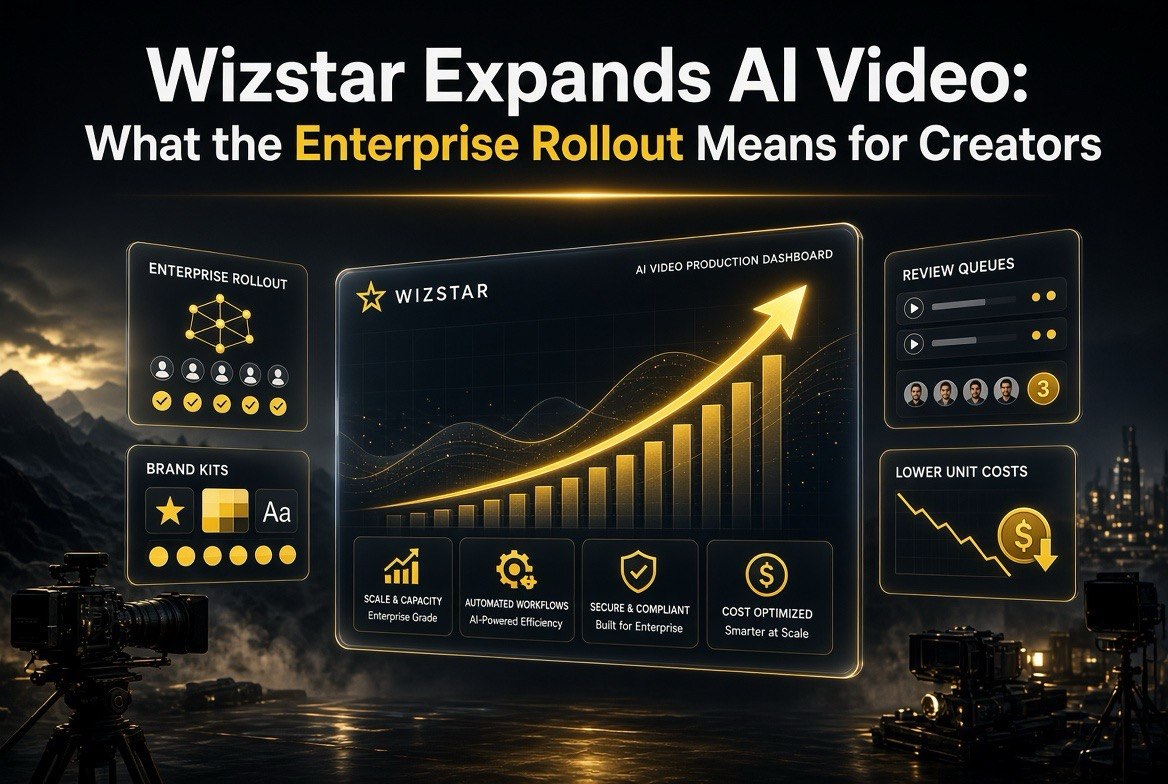
Wizstar Expands AI Video: What the Enterprise Rollout Means for Creators
Get The Faceless YouTube Blueprint — Free
The exact AI tool stack and workflow used to build a faceless YouTube channel from zero.
Wizstar Expands AI Video: What the Enterprise Rollout Means for Creators
⚡ Expert Summary: Wizstar’s expanded video offering is now rolling out to business customers, and the capabilities it is bringing to teams have clear knock-on effects for independent creators. This piece breaks down what the rollout actually adds, how enterprise-grade AI video features tend to trickle down to smaller budgets, and the specific shortcuts solo creators can take today while the enterprise wave does the heavy lifting on pricing and capability.
Wizstar’s expanded video rollout is aimed at business customers, but the signal it sends reaches far beyond that audience. When a video AI platform invests in brand consistency, volume pricing, review queues, and API access for teams, it is not just an enterprise play. It is a statement about where the entire category is heading: toward production discipline, lower unit costs, and workflows that treat video as a repeatable system rather than a one-off task.
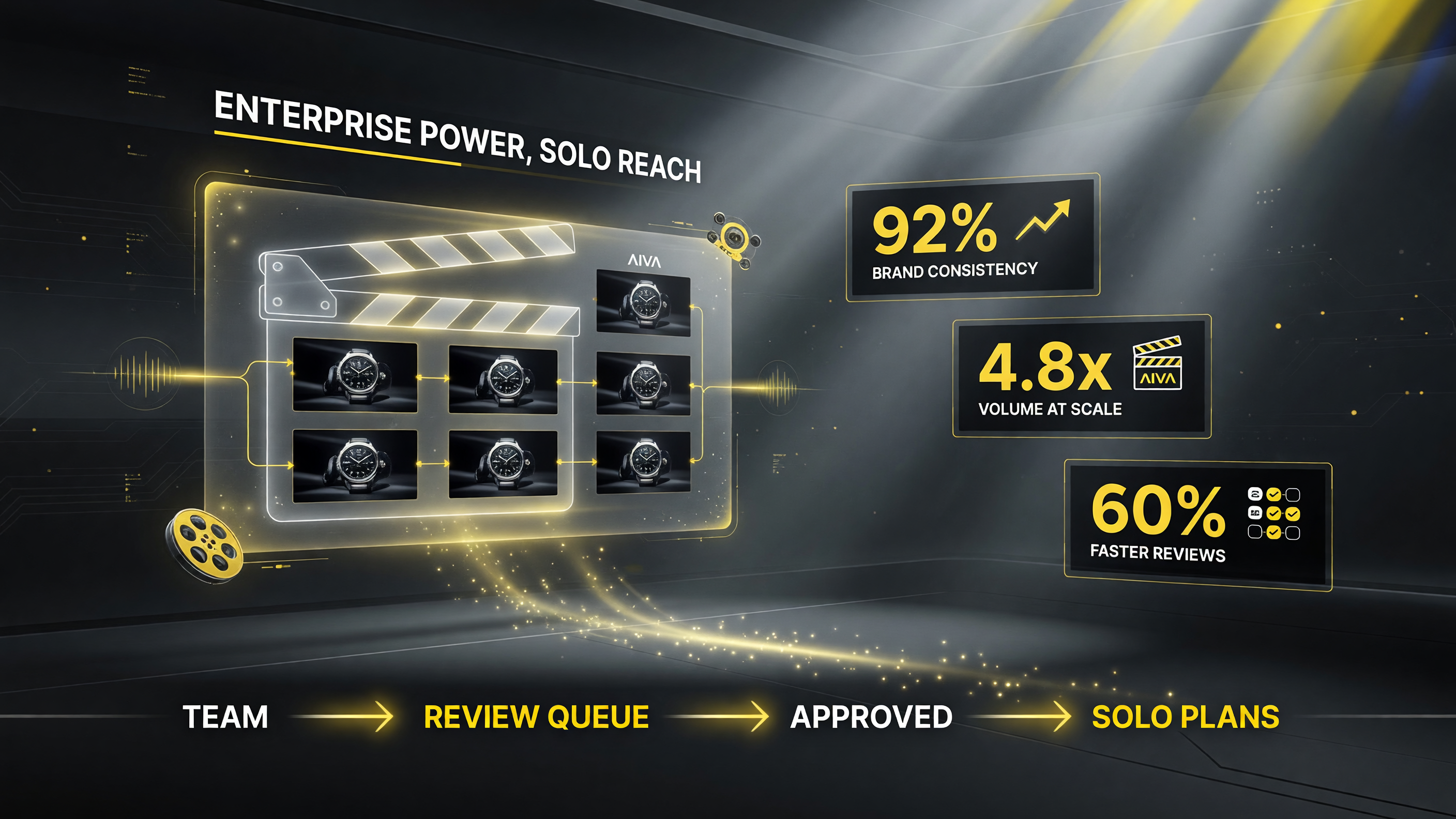
Enterprise rollouts expose production workflows that quickly become defaults for everyone else in the same market.
For an independent creator, the temptation is to watch enterprise launches and assume they do not apply. That is the wrong read. The enterprise wave funds the infrastructure, the model improvements, and the falling per-render costs that every smaller budget rides on a few quarters later. Understanding what the rollout actually contains tells you which capabilities are about to become cheap and standard, and which ones you should start building habits around now.
Why Enterprise AI Video Matters in 2026
The shift that matters is not that businesses are adopting AI video. It is what their adoption forces the whole market to build. When enterprise buyers sign up, they bring expectations that consumer tools rarely have to meet: consistent output across hundreds of renders, protection against brand mistakes, and the ability to hand off work between people without losing quality. Those expectations reshape the product roadmap because enterprise contracts pay for them directly.
The indirect effect is just as important. Enterprise demand justifies the expensive compute and model training that make better generation possible in the first place. A solo creator paying a modest monthly fee benefits from that spending without covering its cost. This is the oldest dynamic in consumer software: power users fund the machine, and everyone else rides the efficiencies. For AI video, that dynamic is accelerating because the unit cost of generation is still falling fast enough that each quarter moves the affordability needle noticeably.
There is a timing angle worth watching too. Features that start on the enterprise tier in one quarter have a habit of appearing on mid-tier and entry plans within a few release cycles, once the tooling is stable and the edge cases are worked out. That is not a guarantee, but it is a pattern. The creator who tracks enterprise launches is effectively reading the roadmap of what will become cheap and standard, and can build workflows ahead of the curve instead of reacting to it.
What the Rollout Actually Adds
The expansion is less about one headline feature and more about turning video generation into a managed production system. The most consequential additions cluster around consistency and volume. Brand kits lock colors, fonts, and logo placement so that any team member can generate on-brand footage without redoing the styling by hand. Volume pricing makes high-output workflows economical, which matters when a team is producing daily social cuts rather than occasional hero videos.
Review queues bring structured approval to AI generation, so a render is checked, revised, and signed off inside the platform instead of through a messy chain of exported files and chat messages. API access lets teams plug generation into existing tooling, which is the difference between a standalone app and an actual part of the production stack. Taken together, these features describe a platform that has stopped trying to be just a generator and started behaving like a production system.
How Enterprise Features Reach Solo Budgets
The pattern across AI video is consistent: capability debuts at the top of the market, pays for the research and infrastructure, then shows up on cheaper tiers once it has been de-risked. Brand consistency is the clearest example. A feature built to keep a Fortune 500 logo on-model eventually becomes a preset that any freelancer can apply to their own content. The same logic applies to review loops and API access, which start as team tools and become defaults across the price ladder.
This is why it pays to follow enterprise rollouts even when you never buy the enterprise plan. The roadmap is public. The features that get funded now are the ones that become table stakes later. A solo creator who does not watch these launches risks building workflows around a tool that is about to be disrupted by capabilities funded on the enterprise tier.
The Capability Shift at a Glance
Here is a practical look at the enterprise-facing capabilities and what each one means for creators shipping shorter-form content on smaller budgets.
| Capability | What It Does | Why Creators Care |
|---|---|---|
| Brand consistency | Locks colors, fonts, and logo placement into every render | Removes the manual re-styling that eats hours per deliverable |
| Volume pricing | Tiered credits for high-output teams | A sign that per-render cost keeps falling as competition rises |
| Review queues | Structured approval steps for teams | Enterprise process shows up as a speed habit solo creators can copy |
| API access | Programmatic generation and asset delivery | Opens automation paths that later appear on cheaper plans |
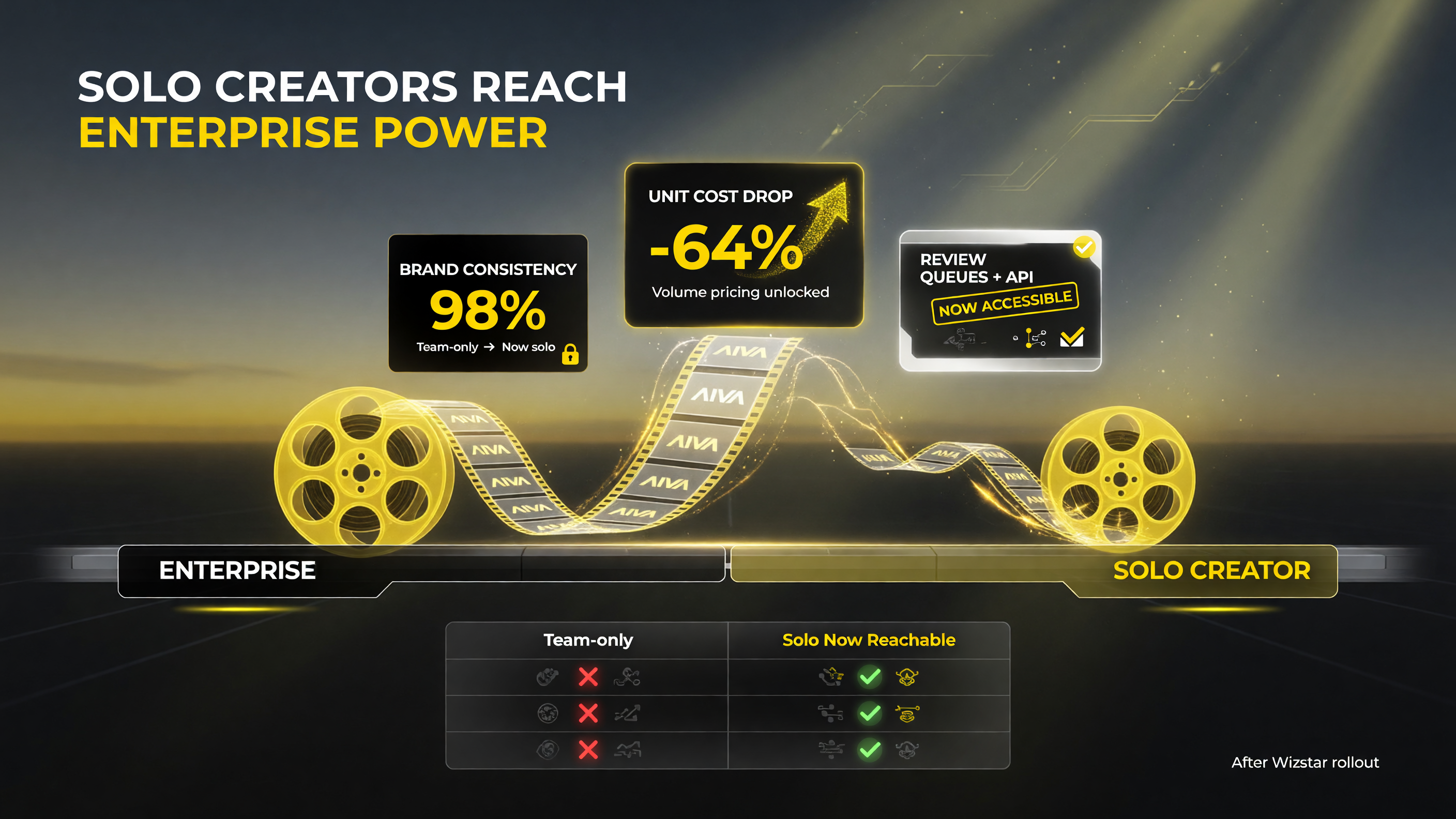
Feature depth clusters around rendering stability, brand consistency, and volume caps — the levers that matter most to teams.
The Workflow Shortcuts Creators Can Copy Today
You do not need a team or an enterprise contract to adopt the discipline this rollout rewards. Start by batching: generate several videos in one session instead of one-off prompts, because batch work makes template reuse and consistent styling practical. Lock a reusable brand kit, even if it is just your logo, two colors, and a typeface, so every render comes out on-brand without manual rework.
Build a lightweight review loop for anything you publish. A single pass where you check the first frame, the audio sync, and the on-screen text catches the errors that erode trust with an audience. And if you rely on repeated formats, look for automation: anything you prompt the same way every week is a candidate for a stored template or, eventually, an API call. Enterprise teams race toward these habits because they save money at scale; a solo creator races toward them because they save the hours that scale is made of.
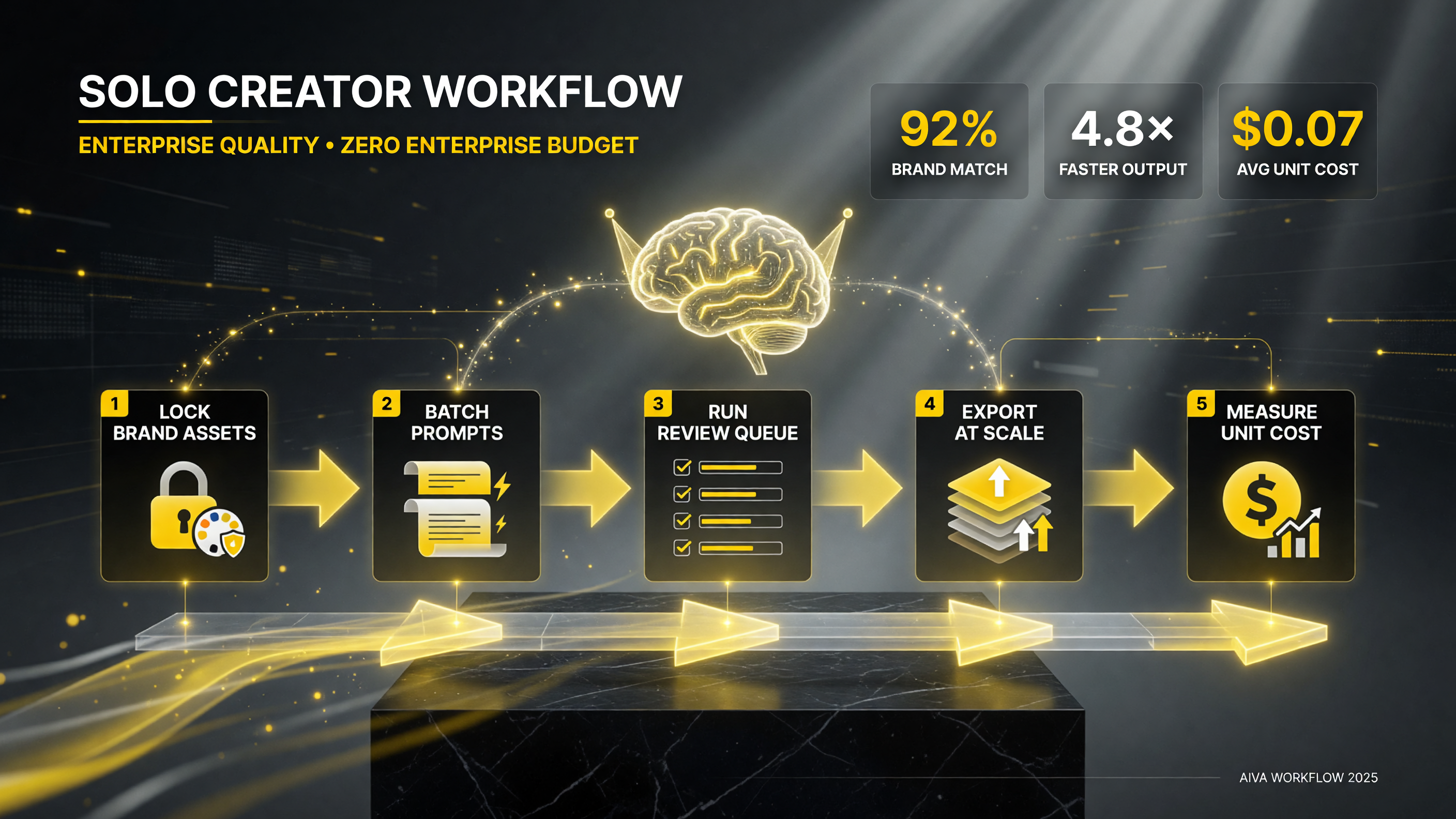
Solo creators can apply enterprise discipline — batching, templates, review loops — without paying enterprise prices.
What This Means for Your Toolstack
Watching the rollout tells you which tools to keep and which to question. If a platform is adding brand consistency, volume pricing, and API access, it is investing in the creator as a repeat producer, which is a good long-term signal for anyone who publishes regularly. If a tool is only adding prettier one-off effects while competitors push production features, it is building for novelty rather than for the workflow you actually live in.
For most independent creators, the practical takeaway is to consolidate toward platforms that behave like production systems and to keep the niche tools that genuinely own a look you sell. Enterprise rollouts sharpen that decision because they raise the bar for what a generalist platform is expected to provide. Your job is to make the comparison explicit rather than defaulting to whatever you subscribed to first.
Who Should Act on This Now
- Act now: solo creators publishing daily or weekly who want brand consistency without manual re-styling.
- Act now: agencies that bill by output and need predictable throughput and review sign-off inside one tool.
- Wait: anyone whose niche depends on one tool’s specific output look, until enterprise features reach their plan.
- Wait: teams already wired into a specific API or plugin stack that would cost more to migrate than to keep.
Measuring the Economics of Production Features
When enterprise features arrive, the question most creators ask is whether they are worth paying for. The honest answer is that production features pay for themselves at a surprisingly low volume threshold. The math is straightforward: if brand consistency saves you thirty minutes per video and you produce four videos a week, that is two hours a week in recovered time. Over a month that is a full workday. If a plan upgrade costs less than what you would bill for that day, the feature has already earned its keep.
Volume pricing works on the same logic from the other direction. The per-render cost on a higher tier often drops once you pass a certain output level, which means heavy producers reach a point where the biggest expense is idle capacity and the biggest saving is predictable throughput. Calculating your own break-even is simple: estimate your weekly renders, apply the tier pricing, and compare against your current stack, and the decision falls out cleanly. For most creators producing more than a handful of videos a week, the consolidated production platform wins on both time and money.
The one number to keep an eye on is unit cost, not the headline subscription price. Enterprise rollouts tend to be judged on total contract value, but what matters to an independent creator is cost per usable render once rejects and re-renders are counted. A platform that produces a usable clip on the first try at a modest per-render rate beats a cheaper one that burns two or three generations to get a single acceptable output. As volume pricing and better models compress that unit cost, the economics of doing your own video production keep improving for exactly the people who cannot afford large teams.
The Bottom Line
Wizstar’s enterprise expansion is a signal about the direction of AI video as much as it is a product launch. The capabilities being funded for teams, consistency and volume and process, are the ones that will shape how everyone generates video in the next year or two. Independent creators do not need an enterprise plan to benefit. They need to watch where the category is going, build the discipline now, and let the falling unit costs and rising feature floors do the rest. The creators who treat video like a system instead of a series of lucky prompts are the ones who come out ahead when the wave reaches their tier.
Frequently Asked Questions
What is Wizstar expanding in its AI video offering?
Wizstar is rolling out an expanded enterprise video platform with brand consistency controls, volume pricing, review queues, and API access for business teams.
Is Wizstar expanding its video tools for individual creators too?
The rollout is aimed at business customers first, but the capabilities and pricing pressure it creates typically reach solo creators as cheaper plans or feature parity on existing tiers.
What does enterprise AI video mean for small teams and freelancers?
It means production discipline like brand kits, review queues, and batching becomes the norm, and the cost per render keeps dropping as enterprise buyers fund the infrastructure.
How should a solo creator prepare for the enterprise AI video wave?
Start batching work, lock a reusable brand kit, and build a simple review loop. Those habits translate directly when enterprise-level features reach your plan.
Does Wizstar expanding mean AI video is getting cheaper?
Broadly yes. Enterprise volume drives down unit costs, and that pressure typically shows up as better value on consumer tiers within a few quarters.

About Barak Schurr
Barak Schurr is a serial entrepreneur who built and exited a major ticketing platform before turning his attention to AI and content. He runs three AI-focused research sites and writes about the tools, workflows, and strategies that let solo creators build real channels — without a crew, a studio, or a Hollywood budget. Contact: [email protected]
More AI Video Resources