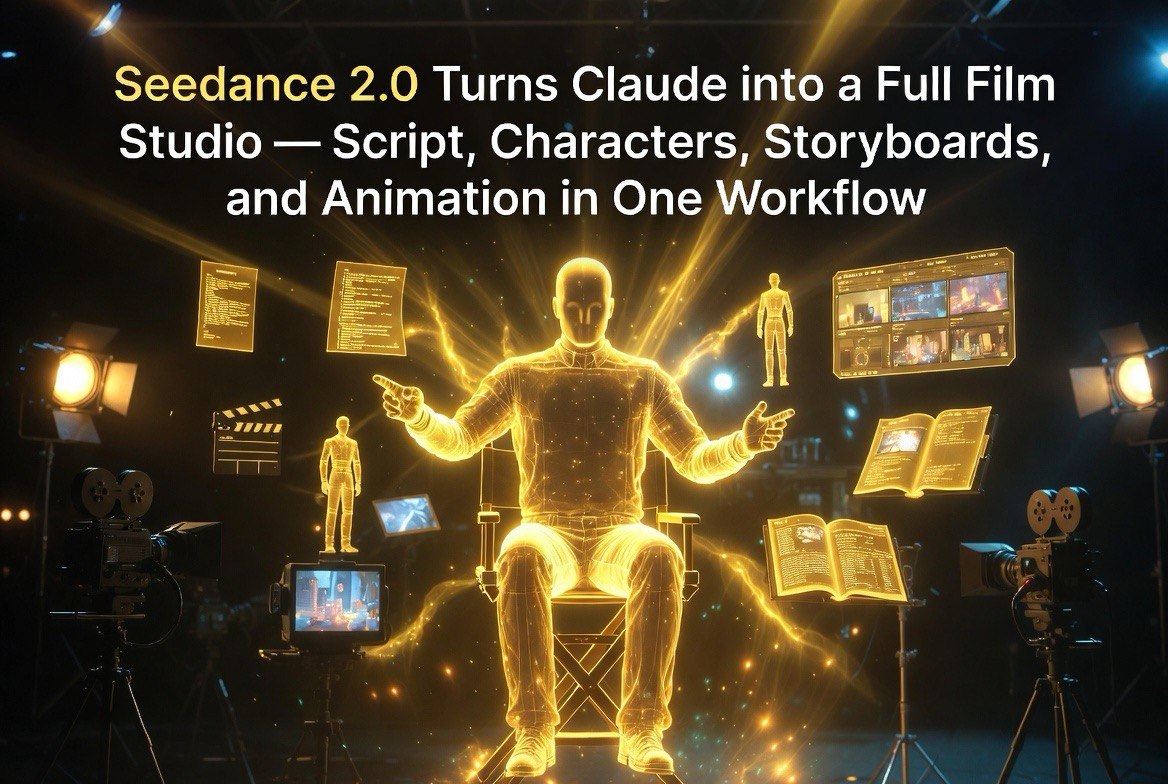
Seedance 2.0 Turns Claude Into a Full Film Studio — Script, Characters, Storyboards, and Animation in One Workflow
Get The Faceless YouTube Blueprint — Free
The exact AI tool stack and workflow used to build a faceless YouTube channel from zero.
Seedance 2.0 Turns Claude Into a Full Film Studio — Script, Characters, Storyboards, and Animation in One Workflow
⚡ Expert Summary
- Seedance 2.0, integrated with Higgsfield and Claude MCP, creates a complete AI film production pipeline — generate a story in Claude, build character sheets and storyboards through Nano Banana Pro, and animate everything in Seedance 2.0 with consistent characters across scenes.
- Google Flow also launched an agentic filmmaking layer powered by Gemini + Veo, and Google Omni enables in-video editing via natural language prompts — swap objects, change lighting, remove screens from existing footage.
- AI video is transitioning from “generate a clip” to “produce a film” in 2026, with multiple platforms now offering continuity, multi-shot consistency, and production pipeline integration.
Why it matters: The gap between “I have a video idea” and “I have a finished video” just narrowed dramatically. Seedance 2.0 + Higgsfield is the first combination that treats AI video as a production process, not a clip generation tool. For content creators producing narrative-driven work, this is a workflow revolution.
If you’ve been following the AI video space in 2026, you’ve noticed a shift. The conversation is no longer about which model generates the prettiest clips. It’s about which ecosystem can produce a finished video — with consistent characters, coherent narratives, and production value that doesn’t require hours of post-production assembly.
Two developments this week are accelerating that shift: Seedance 2.0’s integration with Higgsfield and Google’s simultaneous launch of Flow and Omni. Together, they represent the transition from AI video generation to AI film production.
Let me walk through what landed and what it means for creators.
Who Should Use the Seedance + Higgsfield Pipeline
The Seedance 2.0 and Higgsfield integration is not for every content creator. Understanding who benefits most helps avoid the disappointment that comes from using the wrong tool for the wrong job.
The ideal user is a creator producing narrative content with recurring characters, a developing story arc, and scenes that connect across multiple videos. This covers YouTube series creators, branded content producers producing multi-episode campaigns, educators building course video series with a consistent instructor avatar, and fiction creators adapting written stories into visual format. For these creators, character consistency and narrative coherence are non-negotiable — and the pipeline approach delivers both.
The tool is less useful for short-form social media creators producing one-off clips for TikTok, Reels, or YouTube Shorts. For that use case, standalone video generators like Vidu Q3 or Runway Gen-4 are faster and cheaper. The pipeline overhead — character sheets, storyboards, structured script generation — adds production value but also adds production time. If your video lives for 15 seconds and disappears into an algorithm feed, the pipeline is overkill.
The distinction matters because the AI video market in 2026 is converging on two separate product categories under the same label. One category is “clip generation” — fast, cheap, ephemeral. The other is “production pipeline” — slower, more expensive, more durable. Choosing the wrong category leads to the same frustration that comes from using a food processor when you need a chef’s knife. Both are kitchen tools. Neither substitutes for the other.
Seedance 2.0 + Higgsfield: The Full Pipeline
Seedance 2.0, by itself, is a strong AI video generator — fast, realistic, and customizable. What makes the May 2026 launch noteworthy is the integration with Higgsfield’s MCP (Model Context Protocol) layer, which turns Claude into a complete film production tool.
Here’s the workflow:
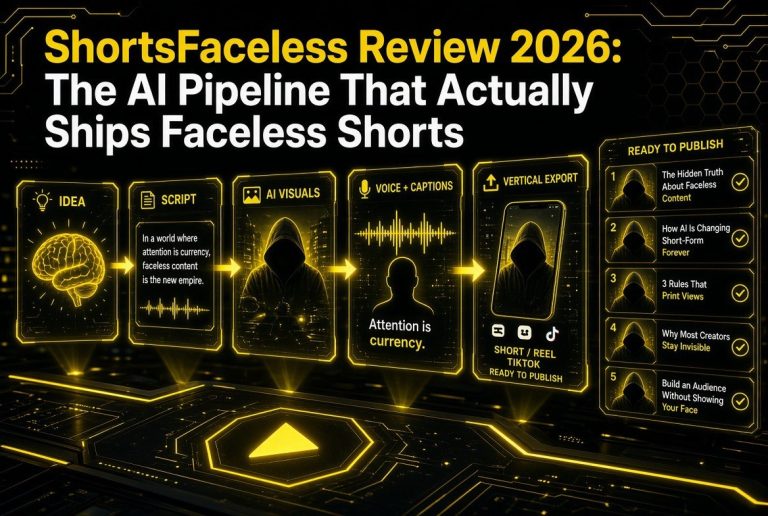
Step 1: Generate your story in Claude. Describe the narrative, characters, setting, and key scenes in natural language. Claude structures this into a production-ready script.
Step 2: Build character sheets and storyboards through Nano Banana Pro. The character sheets ensure visual consistency across scenes — the protagonist looks the same in scene 1 and scene 10. The storyboard maps camera angles and transitions.
Step 3: Animate everything in Seedance 2.0. The model takes the structured input and generates video with consistent character appearances, coherent scene flow, and natural motion.
The integration eliminates the biggest frustration with AI video: character inconsistency. In standalone video generators, a character’s face, clothing, and proportions shift between clips. The Higgsfield pipeline maintains visual continuity across the entire production.
Seedance 2.0 currently ranks well against competitors on generation speed and realism. The partnership with Higgsfield gives it a workflow advantage that pure generation models can’t match.
Comparing the Production Pipeline Players
While Seedance 2.0 and Higgsfield lead the integrated pipeline approach, the competitive landscape is evolving rapidly in 2026. Understanding the strengths and weaknesses of each option helps creators make informed decisions about where to invest their production workflow.
Seedance 2.0 + Higgsfield wins on creative control and consistency. The character sheet integration through Nano Banana Pro provides the most reliable visual consistency across scenes of any available option. The trade-off is a steeper learning curve and more manual steps in the pipeline. For narrative work where character identity matters — fiction, series content, branded storytelling — this is the stronger choice.
Google Flow wins on accessibility and ecosystem integration. Because it uses Gemini as the reasoning engine and Veo as the generation layer, the barrier to entry is lower for creators already in the Google ecosystem. The output quality is competitive, and the agentic approach to filmmaking reduces manual steps compared to Seedance. For enterprise and educational content where consistency matters less than speed, Flow is the pragmatic choice.
Runway Gen-4 remains the strongest option for standalone quality when generation is the only goal. The model produces the highest per-frame visual quality of any option discussed here, but it lacks the pipeline integration that Seedance and Flow offer. For creators who want maximum aesthetic output from a single generation prompt, Runway is still the benchmark. For those who need multiple consistent scenes in a coherent narrative, the pipeline tools are catching up fast.
The decision ultimately depends on whether you are producing “clips” or “content.” Clips benefit from generation quality. Content benefits from production infrastructure. The May 2026 releases from both Seedance and Google signal that the market is moving decisively toward infrastructure — and creators who invest in pipeline tools now will have a workflow advantage as generation quality across platforms continues to converge.
Google Flow: Agentic Filmmaking From the Search Giant
Google’s entry into agentic video production — Flow — uses Gemini as the reasoning engine and Veo as the generation layer. The concept is similar to Higgsfield + Seedance: describe the film you want, and the system handles the production planning and execution.
Flow’s strength is Google’s ecosystem depth. Veo’s quality is already strong (as I discussed in the Vidu Q3 comparison piece), and Gemini’s reasoning capabilities mean Flow can handle more complex narrative instructions than competing tools. The output quality benefits from Google’s compute infrastructure and years of multimodal research.
Flow is particularly strong for enterprise and educational content — training videos, product explainers, internal communications — where consistency and accuracy matter more than creative flair. For narrative filmmaking, Seedance 2.0 + Higgsfield has the edge in creative control and character consistency.
Google Omni: Edit Existing Video With Natural Language
Google Omni, released alongside Flow, is a different kind of tool. Instead of generating new video, Omni lets you edit existing video using natural language prompts. Want to swap a product in a scene? Change the lighting from warm to cool? Remove a distracting background element? Describe the change, and Omni executes it.
This capability is significant because it addresses a pain point that generation tools can’t solve: what do you do with video you’ve already shot?
Content creators have libraries of footage — product demos, event recordings, talking-head content — that are expensive to reshoot and time-consuming to edit. Omni makes old footage editable as if it were a text document. The practical applications range from quick fixes (remove the coffee cup that wandered into frame) to significant revisions (replace the product in a demo video without reshooting).
For creators producing weekly or daily content, the time savings are substantial. A video that would require a full reshoot due to a small error can now be fixed in minutes with a text prompt.
Where the Pipeline Tools Are Heading
Based on the trajectory of both Seedance/Higgsfield and Google Flow, the next 6-12 months will bring several predictable improvements to the AI film production space.
First, the number of manual steps in the pipeline will decrease. Currently, creators move between Claude for script generation, Nano Banana Pro for character sheets, and Seedance for animation. These tools are integrated but not unified. The next iteration will likely combine script, storyboard, and generation into a single interface — you describe the film, and the system handles all intermediate steps autonomously.
Second, character consistency will improve from “good enough for short content” to “reliable across full productions.” The current character sheet approach works well for 10-15 scenes but degrades for longer productions with changing lighting, camera angles, and emotional expressions. Advances in character embedding and temporal consistency models are already in development and should reach production in late 2026.
Third, audio synchronization will become standard. Vidu Q3 already outputs audio and video in one pass. Seedance and Flow will need to match this capability to remain competitive for narrative content where voice acting, sound design, and music are integral to the viewing experience.
Creators who build their workflows around pipeline tools now will have a compounding advantage as these improvements roll out. The learning curve is real, but the tools are only getting better, and the gap between “I can make AI video” and “I can make AI films” is closing faster than most creators realize.
What This Means for Content Creators
The AI video landscape in May 2026 is splitting into two tracks. One track is the clip generator — Vidu, Runway, Kling — optimized for producing isolated scenes for social content. The other track, now represented by Seedance 2.0 + Higgsfield and Google Flow, is the production pipeline — optimized for producing complete videos with narrative structure and visual consistency.
Both tracks have their place. For TikTok and Reels content, clip generators are faster and cheaper. For YouTube videos, branded content, and any work that needs storytelling continuity, the production pipeline approach is rapidly becoming the better option.
My advice: If you’re producing short-form social content, stick with clip generators. If you’re producing narrative work, branded content, or educational series, start experimenting with the production pipeline tools. The gap between the two approaches will narrow over the next 6-12 months, but the pipeline approach is where the industry is heading.
FAQ
What is Seedance 2.0?
Seedance 2.0 is an AI video generator focused on fast, realistic, and customizable video output. Its integration with Higgsfield and Claude MCP creates a full film production pipeline from script to finished video.
What is Google Flow?
Google Flow is an agentic filmmaking layer powered by Gemini and Veo. It handles narrative planning and video generation from a single description, with a focus on enterprise and educational content production.
What is Google Omni?
Google Omni is an in-video editing tool that lets you edit existing footage using natural language prompts — swap objects, change lighting or materials, remove elements — without reshooting or complex post-production.
Can I maintain consistent characters across scenes in Seedance 2.0?
Yes. Through the Higgsfield integration with Nano Banana Pro character sheets, Seedance 2.0 maintains consistent character appearance, clothing, and proportions across multiple scenes — solving the biggest consistency problem in AI video.
Which AI video tool should I use in 2026?
For short-form social clips: Vidu Q3 (native audio), Runway Gen-4 (best quality), or Seedance 2.0 (fastest). For narrative filmmaking and branded content: Seedance 2.0 + Higgsfield or Google Flow. For editing existing footage: Google Omni.

About Barak Schurr
Barak Schurr is a serial entrepreneur who built and exited a major ticketing platform before turning his attention to AI and content. He runs three AI-focused research sites and writes about the tools, workflows, and strategies that let solo creators build real channels — without a crew, a studio, or a Hollywood budget.
Email: [email protected]
More AI Resources for Your Business