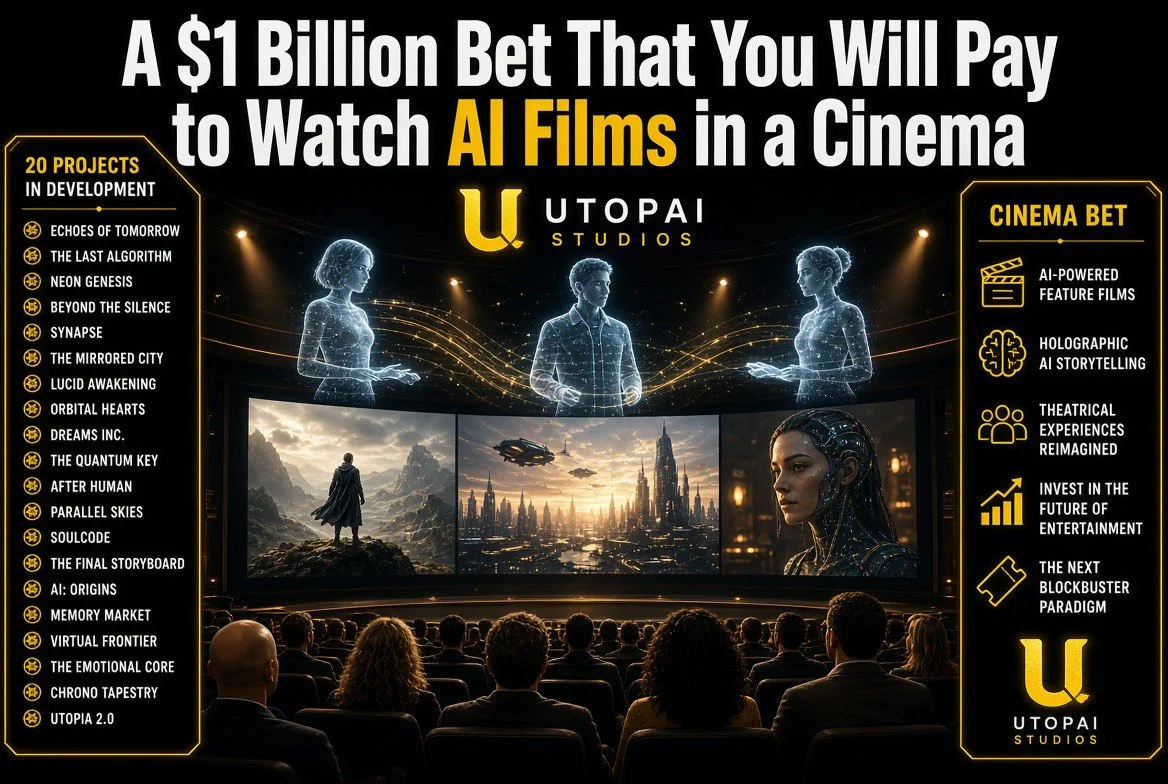
A $1 Billion Bet That You Will Pay to Watch AI Films in a Cinema
A $1 Billion Bet That You’ll Pay to Watch AI Films in a Cinema
⚡ Expert Summary: Utopai Studios raised $60 million at a $1 billion valuation on the strength of more than 20 projects in development, including three films and two TV shows. Not one of them is finished. The company started life as a 3D environment model builder, owns its own AI models rather than renting them, and its CEO says the goal is not cheaper movies but movies the traditional economics would never allow. That is either the most honest sentence in Hollywood or the most expensive one.
Start with the sentence that should stop you. Music Ally’s Stuart Dredge opened his October 26, 2026 report on the funding with a thought experiment: imagine someone founding a record label devoted to releasing AI-generated music, then raising tens of millions of dollars at a unicorn valuation of $1 billion. It is a push, right?
That is exactly what just happened in film. A company called Utopai Studios closed $60 million at a $1 billion valuation, per Dealroom’s reporting on the round. The company has more than 20 projects in development, including three films and two TV shows. One of them is an animated adaptation of the children’s book “The Most Serious Fart.”
Sit with the arithmetic for a second. A billion dollars of enterprise value against a slate where the marquee intellectual property, as reported, involves animated flatulence. Either the market has lost its mind, or the valuation is not really about the films at all.
What Utopai Actually Sells
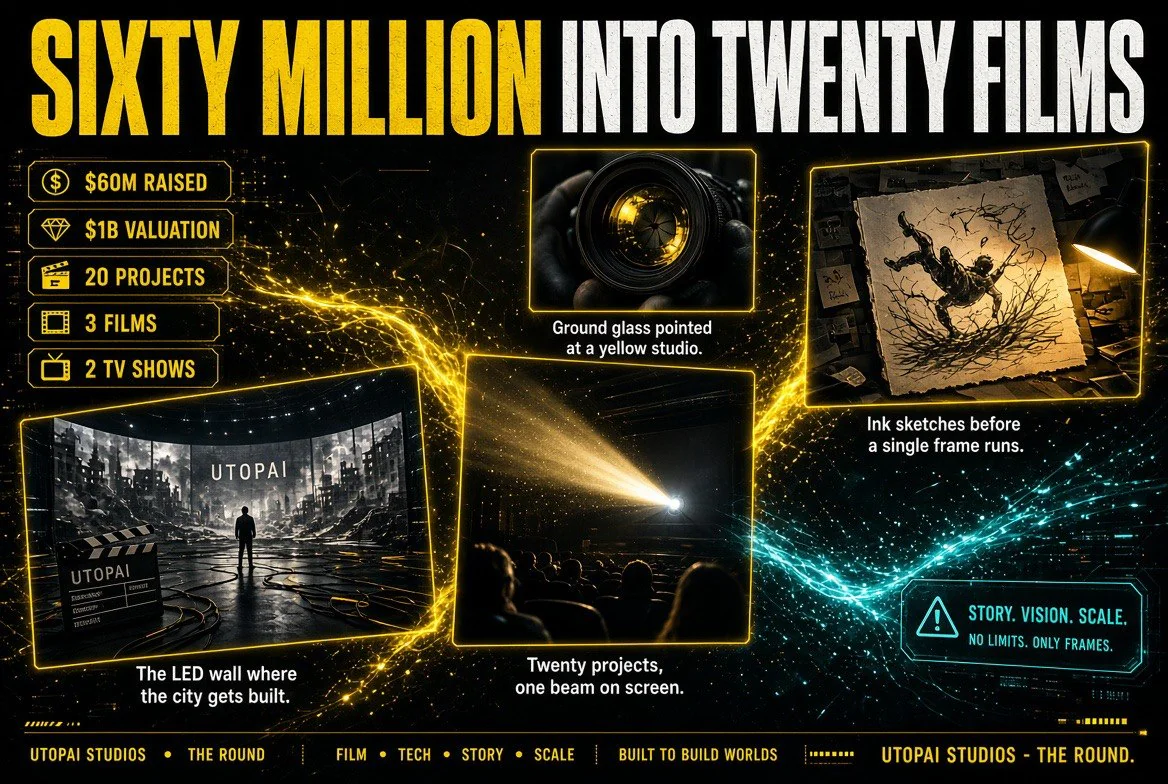
The explanation is in the company’s lineage, and it is the most useful thing in the coverage. Utopai started life as Cyberver, building a model to generate complex 3D environments. It is a technology company that happens to make films, not a film company that happens to use technology.
That distinction is doing enormous work in that valuation. A production studio renting someone else’s generative model is a services business with a content library. A company that owns and trains its own models, and then uses them to produce its own slate, is a platform business with a content library attached. Investors pay a completely different multiple for the second one.
Read the CEO’s framing carefully. Cecilia Shen, a former Googler who spoke at the MIPCOM television conference in Cannes, said the company is “not about making cheaper movies. It’s about making movies possible that the economics of the traditional system might never allow us to make.”
That is a deliberate escape from the cost-cutting pitch. And it is the smarter play, because “we make it cheaper” invites a price war you lose to whoever has the cheapest model next quarter. “We make things that could not otherwise exist” is a moat claim. Whether the moat is real depends entirely on output nobody has seen.
| What is known | Detail | Why it matters to a creator |
|---|---|---|
| Round size | $60 million | Enough to fund a slate, not enough to fund a studio’s overhead for a decade |
| Valuation | $1 billion | A 16.7x valuation-to-raise ratio, which prices in a future nobody can demo yet |
| Slate | 20+ projects, three films, two TV shows | Volume is the tell: they are testing many bets rather than committing to one |
| Origin | Cyberver, a 3D environment model builder | The engine came before the movies, which is the reverse of how studios normally work |
| Model ownership | Own models, not licensed ones | The difference between a vendor dependency and an asset |
| Unreleased | Every single title | The valuation is a claim about output, and there is no output to inspect |
The Theatrical Question Nobody Has Answered
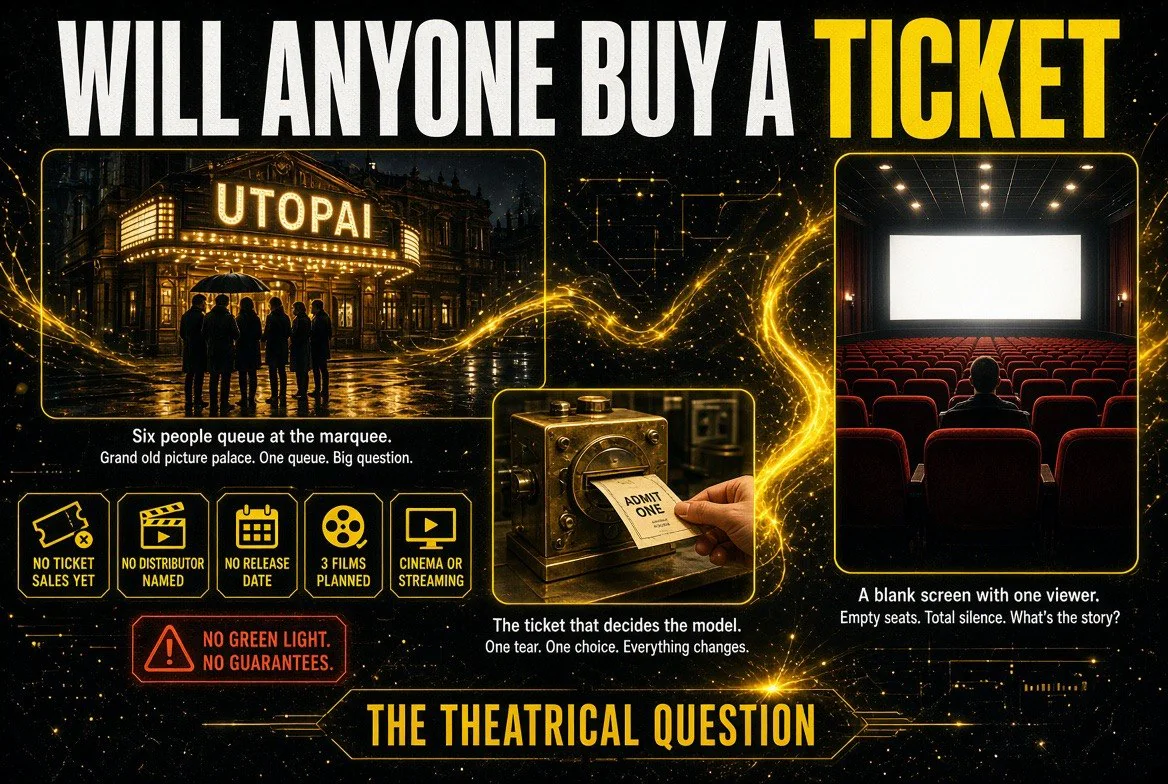
Here is where I part company with the enthusiasm. Raising money to make AI films is not hard in 2026. Raising money to make AI films that people pay cinema prices to watch is a different proposition, and it has not been demonstrated by anyone.
Cinema is not a delivery mechanism. It is a premium experience with premium pricing attached, and the justification for that price has always been that you cannot get this anywhere else. If the film was generated on a model that will be downloadable in eighteen months, the exclusivity argument gets thin. The theatre is selling presence, scale, and the fact that everyone in the room is seeing it for the first time.
AI-generated film is extraordinarily good at spectacle and still shaky at the things that make spectacle mean something. Sustained performance. Micro-expression. A face that carries a thought across a close-up. These are the load-bearing elements of a feature, and they are exactly where generative video has been weakest. A three-minute showcase can paper over a weak performance with a strong cut. Ninety minutes cannot.
That does not mean it is impossible. Shen’s pitch — films the economics would never allow — is the right frame, because it describes a category that never existed rather than a cheaper version of something that does. A visual concept too expensive to build as sets, a world too strange to shoot practically, an animated feature at a budget that would not previously fund a pilot: those are real openings. The mistake would be treating this as a cheaper way to make the same films Hollywood already makes badly.
Why the “Cheaper Movies” Pitch Is a Trap
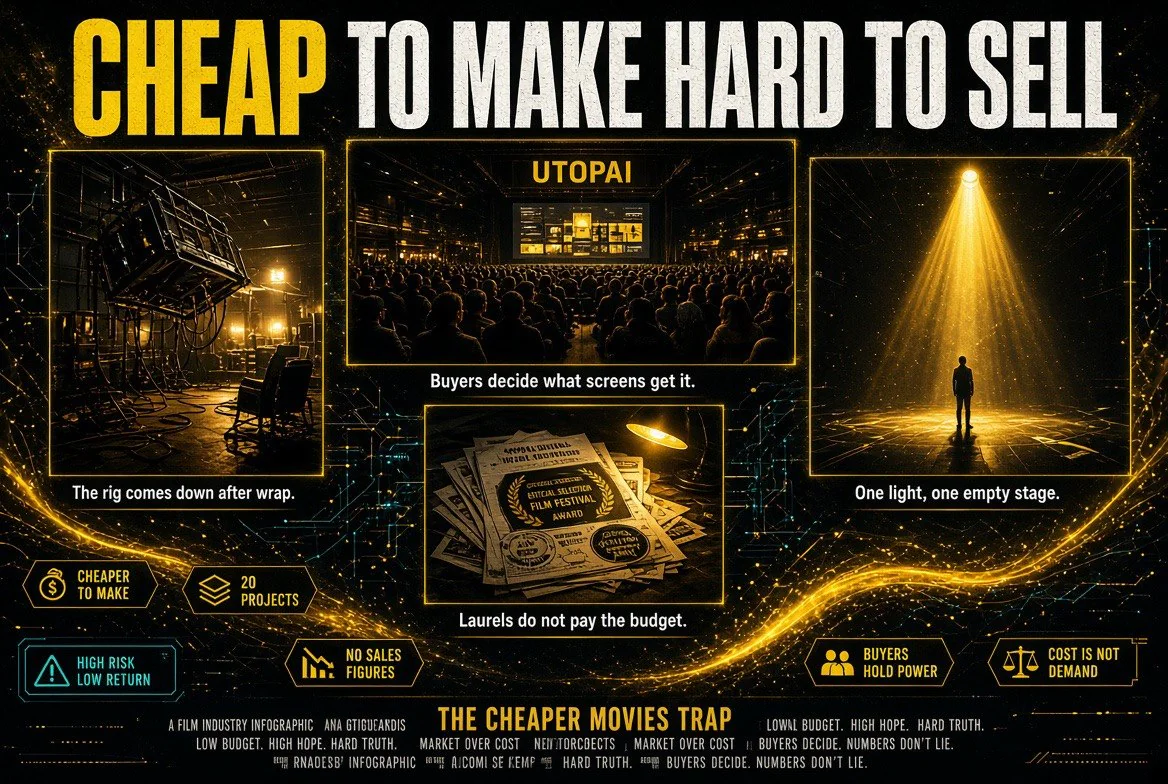
Look at what the AI video tool market actually sells right now, and you can see the trap clearly. Every model release leads with the same three words: faster, cheaper, easier. Subscription tiers are priced against each other. Feature comparisons are decided on credits per second of output.
If your only claim is cost, your business is a race to the bottom against a model release schedule you do not control. The company that owns the model wins. The company renting it competes on margin it cannot defend. That is true for a solo creator charging for corporate video, and it is true for a studio.
Utopai’s advantage is structural: they built the environment model first, as Cyberver, and the films are downstream of that asset. When you own the generator, cost reduction is a benefit rather than your entire positioning. That is why the $1 billion number is not as insane as it looks on first read — the market is not paying for “The Most Serious Fart.” It is paying for the model underneath it.
| Position | What you own | What happens when models get cheaper |
|---|---|---|
| Solo creator renting tools | Skill, taste, client relationships | Your advantage is speed of adoption; the tools get cheaper and so does your competition |
| Agency on rented tools | Process and account management | Margin compresses as clients learn the tools themselves |
| Studio owning its model | The generator and the slate | Cost reduction becomes upside instead of a threat |
| The lesson for everyone else | Own something the model cannot replace | Positioning on “cheaper” is borrowing your competitor’s roadmap |
What a Creator Should Take From This Round
You are not raising $60 million and you are not making a feature. The transferable lesson is narrower and more useful than the headline.
One: the volume strategy is the smart part. Twenty-plus projects in development with only a handful of named titles is a portfolio approach. They are not betting the company on one film. If you are building an AI-assisted production business, the same logic applies — many small bets, kill fast, double down on the one that works. Do not spend a year on a single proof of concept.
Two: the origin story is a business model, not trivia. Utopai was a 3D environment tool before it was a studio. The capability came first and the content followed. If you are a creator, that is a reminder that the durable asset is the pipeline you build and can repeat, not the one video that went viral.
Three: “not cheaper” is the position worth defending. Shen’s line about making films the traditional economics would never allow is the only version of this business that survives contact with model commoditisation. Apply it to your own work. If your pitch to a client is that you are cheaper, you are renting your strategy from someone else’s pricing page.
Four: nobody has proven the theatrical part. Treat the cinema claims as an ambition, not a result, until there is a release date and a box office number. An entire asset class is currently priced on a distribution model that has not been tested once with this kind of content.
The Thing That Would Prove It
Forget the valuation, the round size, and the slate count. Here is the only data point that will settle this argument: a finished AI-generated feature with a theatrical release, a marketing spend, and a reported box office figure.
Not a trailer. Not a festival screening. Not a showcase of clips set to licensed music. A film in a cinema, with tickets sold, and a number at the end.
If that number is good, the $1 billion looks cheap and every studio in town starts building a model. If it is bad, the technology survives and the theatrical ambition does not — which would leave Utopai as an excellent tooling company that made some films nobody watched in a room. Both outcomes are informative. Neither has happened yet.
The uncomfortable truth about this round is that it prices certainty into a market that has produced none. Twenty projects, three films, two shows, one animated fart joke, and a founder who says the point is films the old system could not make. That is a genuinely interesting thesis. It is also a thesis, and a billion dollars is a lot to pay for one.
Frequently Asked Questions
How much did Utopai Studios raise and at what valuation?
Utopai Studios raised $60 million at a $1 billion valuation, according to reporting by Dealroom covered by Music Ally on October 26, 2026. That is a valuation-to-raise ratio of roughly 16.7x, which prices in substantial future output.
What is on Utopai’s production slate?
The company has more than 20 projects in development, including three films and two TV shows. One named title is an animated adaptation of the children’s book “The Most Serious Fart,” as reported in the funding coverage.
Why is an AI film studio worth $1 billion?
Because it is valued as a technology company rather than a production studio. Utopai began as Cyberver, building a model to generate complex 3D environments, and owns its own AI models instead of licensing them. Investors are pricing the generator, not just the films.
What does Utopai’s CEO say the company is for?
CEO Cecilia Shen, a former Googler, said at MIPCOM in Cannes that the company is “not about making cheaper movies. It’s about making movies possible that the economics of the traditional system might never allow us to make.”
Has any AI-generated feature film succeeded in cinemas yet?
Not proven. No AI-generated feature has demonstrated a theatrical release with a reported box office result that would validate the premium cinema model. The valuation is currently a claim about future output rather than a response to measured demand.
What can solo creators learn from Utopai’s raise?
Three things: run a portfolio of small bets instead of one long proof of concept, build a repeatable pipeline because that is the durable asset, and never position on being cheaper — cost advantage gets erased by the next model release.

About Barak Schurr
Barak Schurr is a serial entrepreneur who built and exited a major ticketing platform before turning his attention to AI and content. He runs three AI-focused research sites and writes about the tools, workflows, and strategies that let solo creators build real channels — without a crew, a studio, or a Hollywood budget.
Email: [email protected]
More AI Video Resources