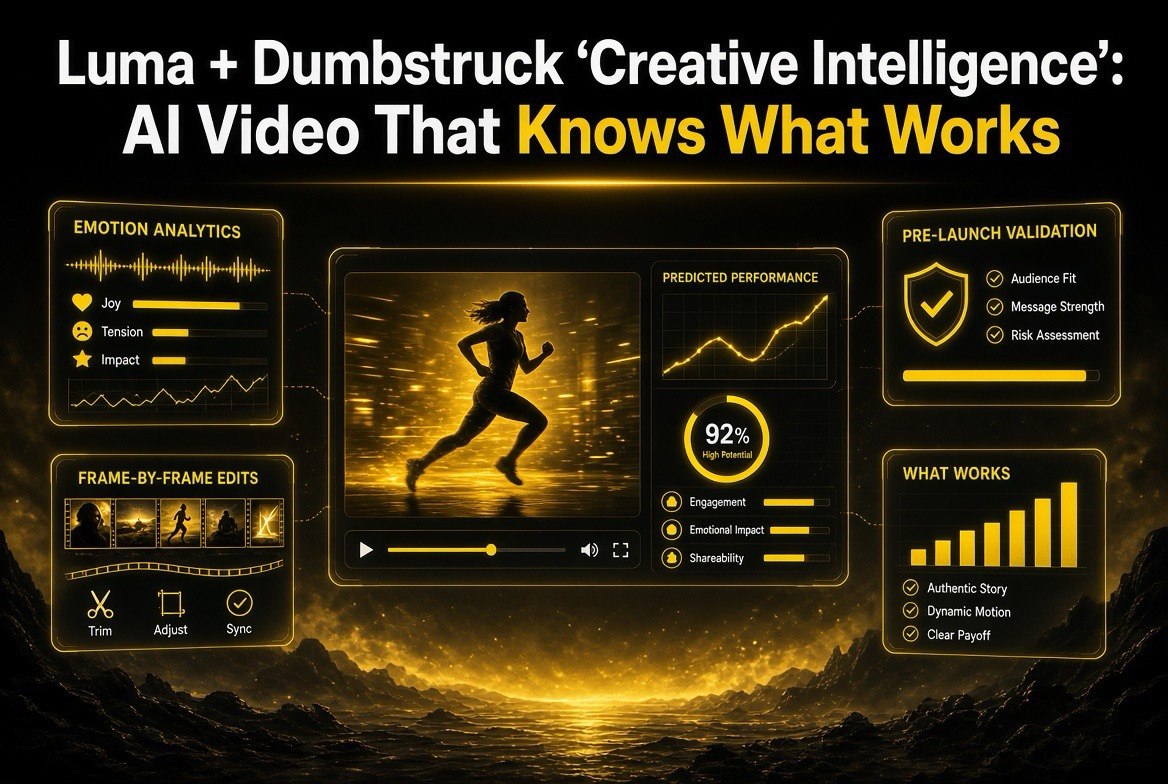
Luma + Dumbstruck ‘Creative Intelligence’: AI Video That Knows What Works
Get The Faceless YouTube Blueprint — Free
The exact AI tool stack and workflow used to build a faceless YouTube channel from zero.
Luma + Dumbstruck “Creative Intelligence”: AI Video That Knows What Works
⚡ Expert Summary: On August 13, 2026, Luma and Dumbstruck launched “Creative Intelligence,” a new category in advertising that pairs Luma’s AI video tools (Luma Agents) with Dumbstruck’s real-time emotion analytics. The closed-loop system measures how viewers emotionally respond to an ad, has AI make frame-by-frame edits to improve it, then validates the result before you spend a dollar on media. For YouTube creators and performance marketers, this is the first workflow that answers the question that matters most: what should I make, not just what can I make.
There is a fundamental shift happening in AI video, and it’s not about generating more content. For the last two years, the floodgates of AI video tools made it trivially easy to generate variations — ten versions of an ad, a hundred thumbnails, countless cuts. The result is that the bottleneck in creative work moved from production to decision. You can make anything now. The hard question is knowing which one will actually perform. Luma and Dumbstruck built a tool to answer that question.
On August 13, 2026, the two companies launched “Creative Intelligence,” which the press materials describe as a new category in advertising. It pairs Luma’s AI video generation and editing (via Luma Agents) with Dumbstruck’s emotion analytics — the same facial-coding technology behind award-winning campaigns for major brands, including Super Bowl ads. Here’s what it does, how the closed loop works, and why it matters for creators and marketers making video content.
Why “Creative Intelligence” Exists: The Decision Bottleneck
The core problem Creative Intelligence is solving is the one every serious video creator now hits: generation is easy, prediction is hard. When an AI tool can produce unlimited variations in minutes, your time is no longer spent assembling content — it’s spent trying to figure out which of the dozens of versions you created will move the needle. Production bottlenecks became decision bottlenecks.
You can feel this firsthand if you’ve ever sat with ten nearly identical AI-generated thumbnails or five ad cuts and had no way to tell which one your audience would click. The creative muscle gets trained on making; the judgment muscle gets no better data. Every creator reaches the point where the limiting factor isn’t output — it’s clarity on what to run.
Traditional approaches threw money at this problem in the form of testing — run the ads, watch the metrics, kill the losers. That’s slow and expensive. Creative Intelligence is built to compress that loop: measure emotional response before media spend, improve the creative based on that data, and only then push it to market. It turns creative into a continuous, improving system rather than a one-and-done deliverable.
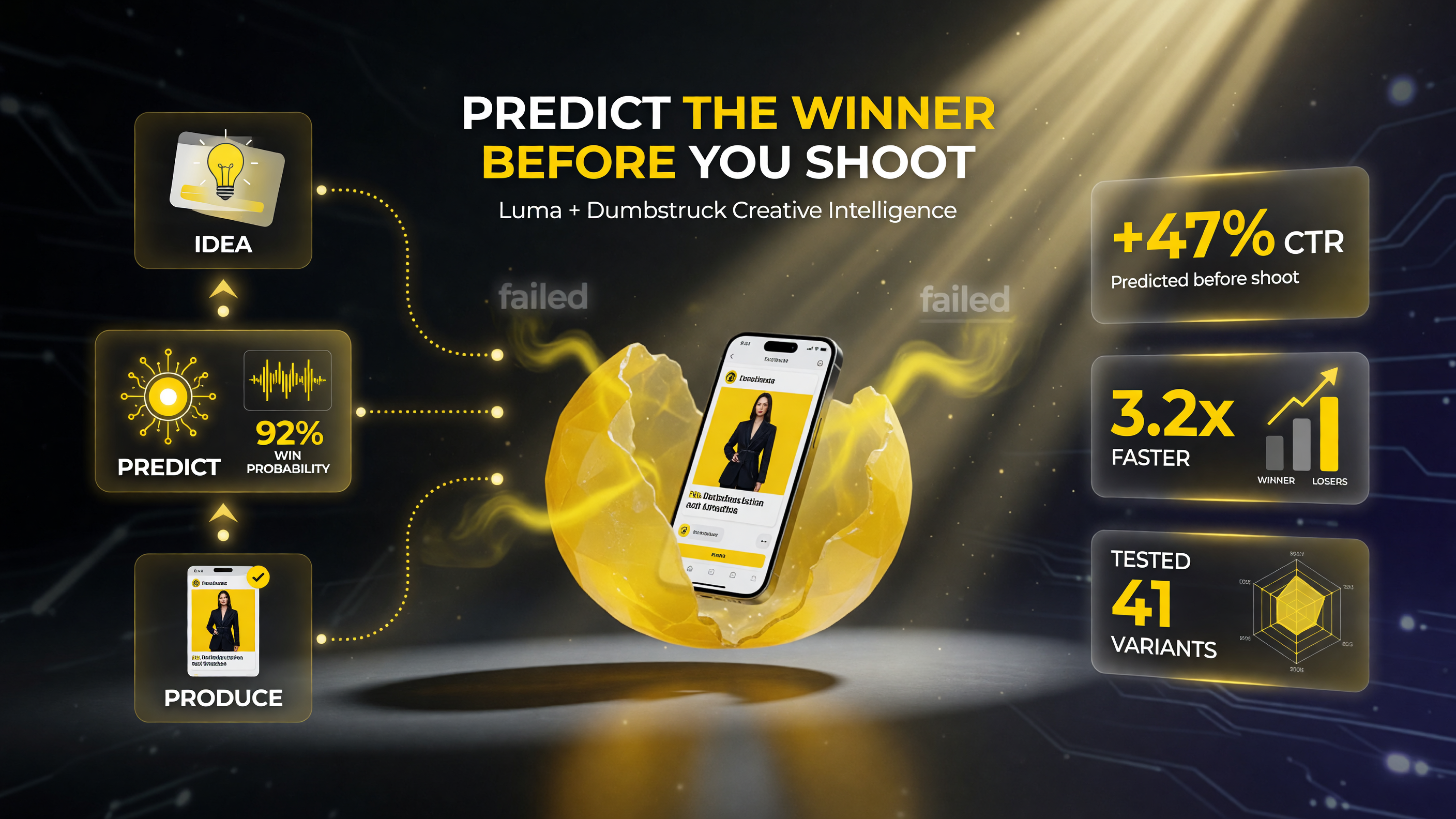
Creative Intelligence predicts the winner before you shoot — a 92% win probability on the concept, ahead of any production spend.
How the Closed-Loop System Works
The magic is in the closed loop between two companies’ technologies. Here’s the flow, step by step:
- Measure: Dumbstruck uses AI-powered facial coding to capture audiences’ emotional, behavioral, and cognitive responses to a video ad — before you launch. It identifies what works, what doesn’t, and exactly which moments need improvement.
- Edit: Luma Agents — AI collaborators running on Luma’s unified multimodal platform — execute precise, frame-by-frame edits to the existing footage based on those insights. No reshoots, no new production day.
- Validate: Dumbstruck re-tests the updated versions, confirming the changes actually move the emotional needle before you commit media dollars.
That final validation step is what separates this from every “AI video tool” you’ve seen. It doesn’t just hand you a pile of variations and wish you luck. It tells you — with real measured human response data — which version is most likely to perform, and it keeps refining until the data says it’s ready.
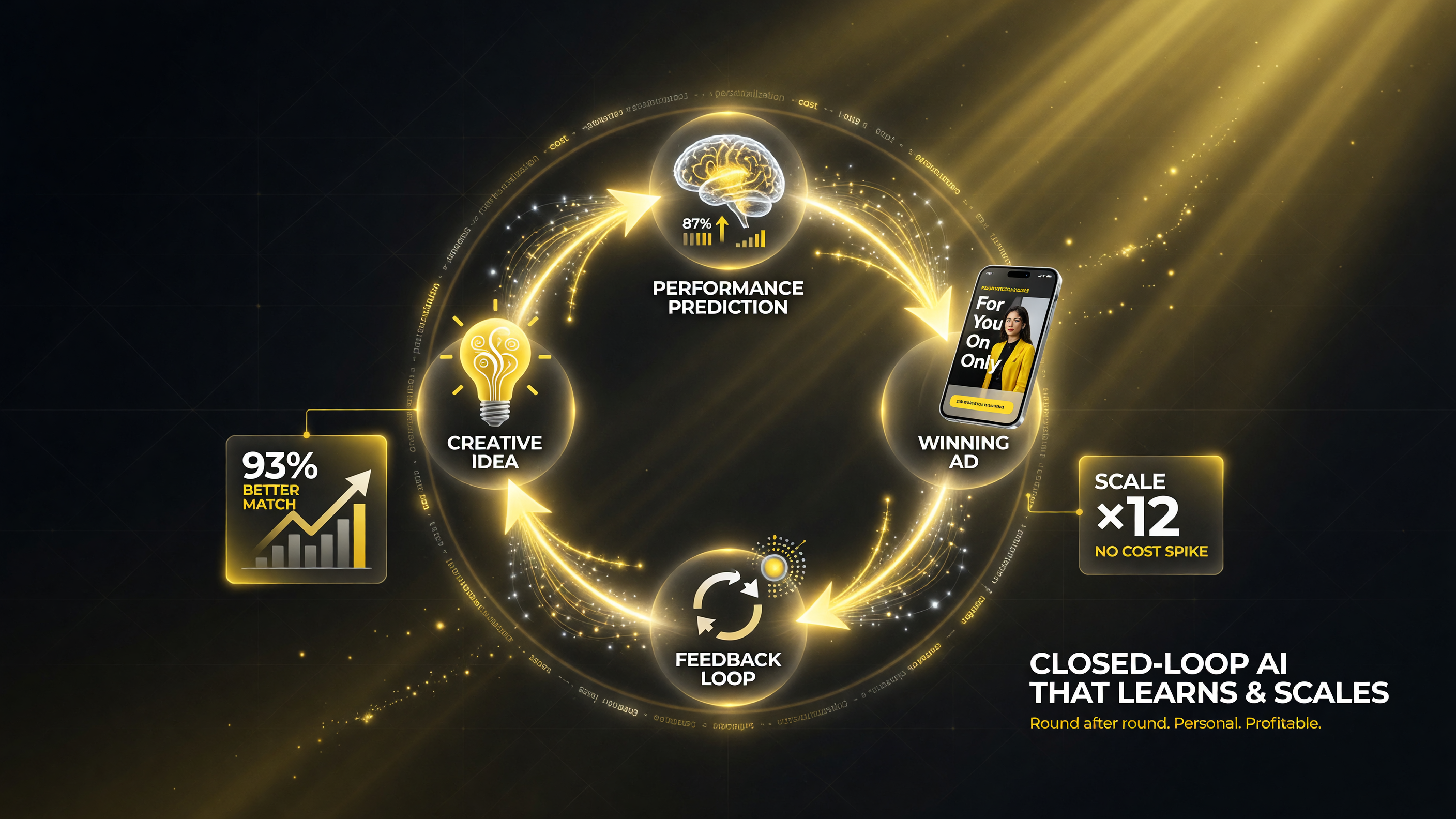
Each round feeds the next — the loop scales personalization to 12x without the cost spike of shooting every variant.
Personalization at Scale Without the Cost Spike
One of the most practical capabilities for any creator or brand running ads is localization and personalization at scale. Normally, creating a version of your ad tailored to a specific demographic or market multiplies your production cost. Creative Intelligence flips that: Luma Agents automatically identify audience-specific tweaks and apply them rapidly, letting you spin up locally resonant versions without a proportional cost increase.
For a YouTube creator or a business running performance marketing, this is a genuinely useful unlock. Instead of one generic ad pushed to everyone, you can serve variants tuned to different regions or audiences — built from the same base footage, adjusted by AI, and validated by emotion data — without burning your entire creative budget on variations.
Who’s Behind It: Luma and Dumbstruck
Understanding the credibility of the two companies helps you trust the claim. Luma builds multimodal AI systems, including the Dream Machine lineage of video models, and now Luma Agents for end-to-end creative workflows. It serves advertising agencies, enterprises, and studios — this isn’t a toy.
Dumbstruck specializes in emotion analytics via facial coding and has powered award-winning campaigns for major brands, including Super Bowl ads. Its whole business is reading human emotional response to video, which is exactly the signal Luma’s generation used to lack. Real-world interest is already showing — brands like Wayfair have been exploring the combination of emotional intelligence with AI video refinement.
Where This Fits in the AI Video Landscape
To be clear about what Creative Intelligence is and isn’t: it’s not a consumer tool for making fun clips. It’s a B2B workflow aimed at agencies, brands, and serious performance marketers who ship video ads at scale. But its arrival changes the floor for everyone else, because it normalizes the idea that AI video’s next frontier is decision — knowing what performs — not just more output.
Here’s how it stacks against the previous generation of AI video tools:
| Capability | Generation Tools | Creative Intelligence |
|---|---|---|
| Generate video variations | Yes | Yes |
| Measure emotional response | No | Yes (pre-launch) |
| Edit based on audience data | No | Yes (frame-by-frame) |
| Validate before media spend | No | Yes |
| Localize at scale | Manual, costly | AI-automated |
Table: How Creative Intelligence differs from standard AI video generation. The leap is adding measurement and validation to the loop — not just more output.
The pattern is clear: every other tool in the market addresses “what you can make.” Creative Intelligence is the first to seriously attack “what you should make.” That framing is why Luma’s team calls it the missing decision layer for performance marketing and creative production.
What This Means for Creators and Marketers
Even if you’re not an agency with a Super Bowl budget, the arrival of Creative Intelligence changes how you should think about your own AI video workflow. Three takeaways:
- Look for the loop, not just the tool. The best AI video setups now measure and refine, not just generate. If your tool produces variations but gives you no signal on what performs, you’re still stuck in the decision bottleneck.
- Test before you spend. The validate-before-media-spend principle is worth stealing even at small scale — get feedback on a cut before you push it everywhere.
- Localize intentionally. AI makes per-audience versions cheap; using that capability deliberately is a real edge in a crowded feed.
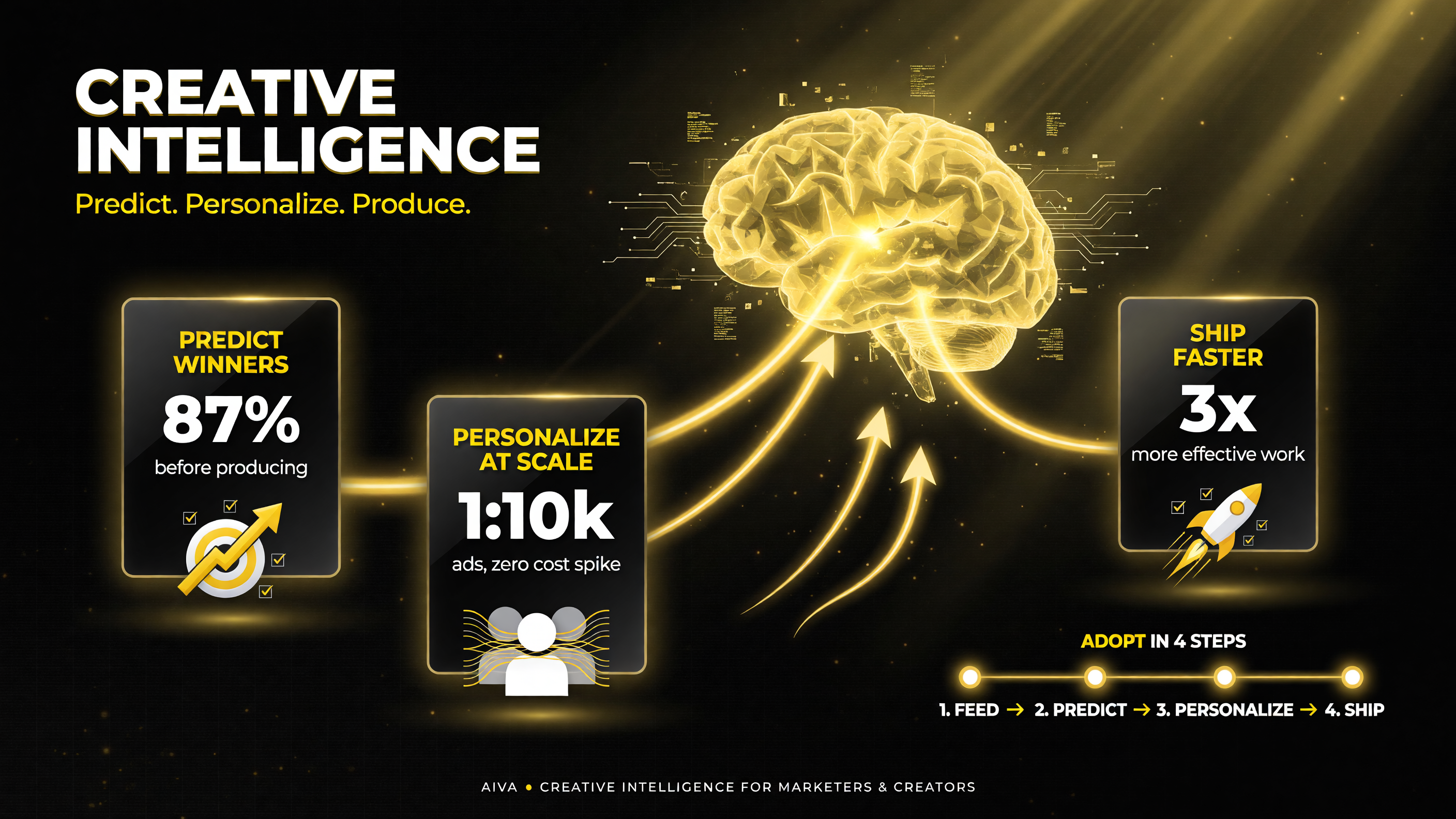
For creators, the practical payoff is predict — personalize — produce: 87% prediction confidence, personalization at 1:10k scale, and 3x faster shipping.
Bottom Line: Creative Intelligence Is the Signal of Where AI Video Goes Next
Luma and Dumbstruck’s Creative Intelligence, launched August 13, 2026, is a genuine milestone because it closes the loop between creating video and knowing what performs. By fusing Luma’s AI video generation with Dumbstruck’s real-time emotion analytics, it answers the question that every serious creator is now wrestling with — not “what can I make” but “what should I make.” Measure, edit, validate, launch: that’s the new standard.
For individual creators and small teams that can’t buy into this exact platform, the takeaway is to bake the same principle into whatever tools you use: generate variations, but insist on a signal — emotion, engagement, or click data — that tells you which one wins before you commit real budget. The tools are moving toward decision intelligence. The creators who adopt that mindset earliest are the ones who’ll avoid wasting their spend on content that was never going to perform.
Frequently Asked Questions
What is Luma and Dumbstruck’s Creative Intelligence?
Creative Intelligence is a new advertising category launched August 13, 2026 that combines Luma’s AI video generation and editing tools (Luma Agents) with Dumbstruck’s emotion analytics. It measures how viewers emotionally respond to an ad, uses AI to edit the footage frame-by-frame, and validates the result before media spend.
How does Creative Intelligence know what ad will perform?
Dumbstruck uses AI-powered facial coding to measure audiences’ emotional, behavioral, and cognitive responses to a video before launch. It identifies which moments work and which need improvement, then Luma Agents make precise edits and Dumbstruck validates the updated version before you spend on media.
Is Creative Intelligence for individual creators or just agencies?
It’s primarily a B2B workflow for advertising agencies, brands, and performance marketers shipping video ads at scale. But it signals a shift toward decision-focused AI that individual creators should follow by adding measurement and validation to their own video workflows.
Who are Luma and Dumbstruck?
Luma builds multimodal AI systems including the Dream Machine video model lineage and Luma Agents for creative workflows. Dumbstruck specializes in emotion analytics via facial coding and has powered award-winning campaigns for major brands, including Super Bowl ads.
What makes Creative Intelligence different from other AI video tools?
Most AI video tools focus on generating variations (what you can make). Creative Intelligence adds measurement and validation — using real human emotional response data to determine what you should make and refining it before media spend, closing the decision bottleneck.

About Barak Schurr
Barak Schurr is a serial entrepreneur who built and exited a major ticketing platform before turning his attention to AI and content. He runs three AI-focused research sites and writes about the tools, workflows, and strategies that let solo creators build real channels — without a crew, a studio, or a Hollywood budget. Contact: [email protected]
More AI Resources for Your Business