Alibaba Wan 3.0 Public Beta: 30-Second Multimodal AI Video, Priced Per Second
Get The Faceless YouTube Blueprint — Free
The exact AI tool stack and workflow used to build a faceless YouTube channel from zero.
Alibaba Wan 3.0 Public Beta: 30-Second Multimodal AI Video, Priced Per Second
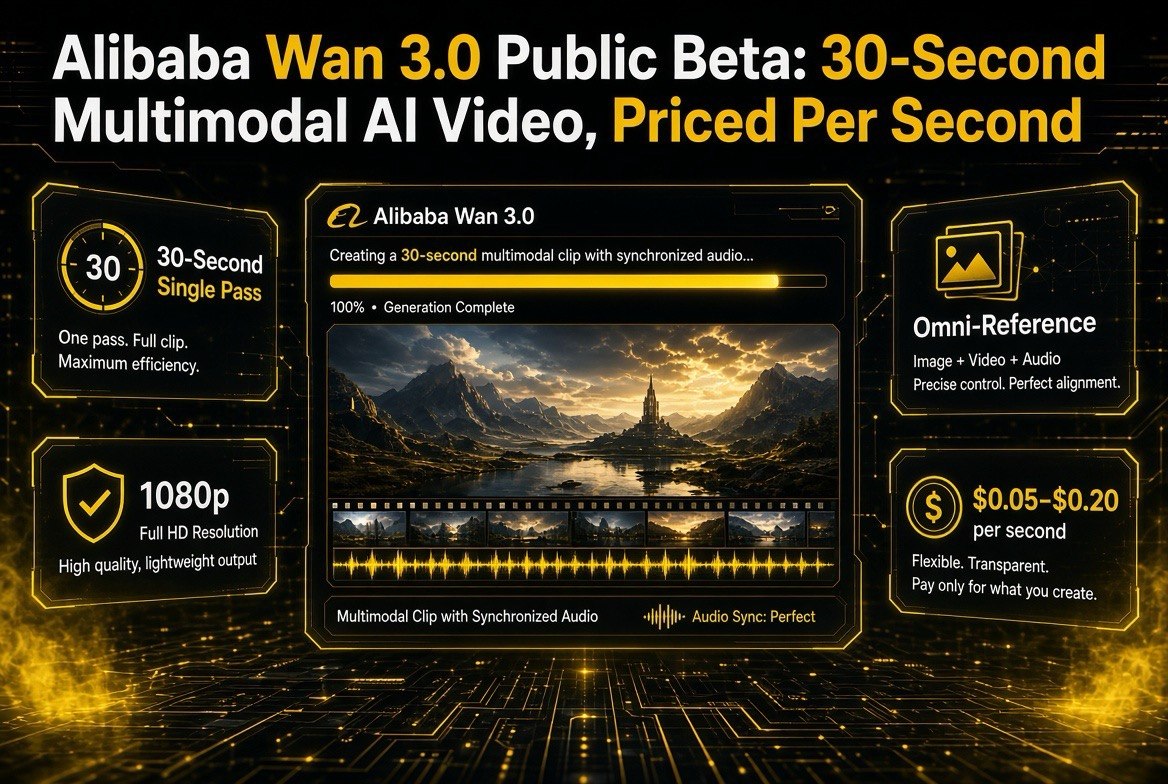
⚡ Expert Summary: On August 6, 2026, Alibaba moved Wan 3.0 into public beta — an AI video model that generates native 30-second clips in a single pass (roughly double Wan 2.7’s ~15-second limit), at up to 1080p, with synchronized audio in the same run. Its standout feature is Omni-Reference multimodal input: it can turn a PDF, PowerPoint, spreadsheet, or webpage link directly into video, not just text and images. International API pricing runs $0.05–$0.20 per second depending on resolution. For creators, that’s longer, document-aware, measurable-per-second video — a genuinely different workflow than the US tools you’re used to.
If you make video with AI, you know the two complaints that come up constantly: clips are too short, and the tool can only understand text prompts. Alibaba’s Wan 3.0, which hit public beta on August 6, 2026, attacks both at once. It generates native 30-second clips in a single pass — roughly double the ~15-second ceiling of its predecessor Wan 2.7 — at up to 1080p, and it brings along synchronized audio generated in the same run.
But the feature that separates Wan 3.0 from the crowd is Omni-Reference: a multimodal input system that accepts text, images, audio, video references, and even documents (PDF, DOC, XLS, PPT, TXT) and webpage links. That means you can hand it a slide deck and get back video, or feed it a spreadsheet and have it produce a visual story from the data. Here’s what’s actually new, what it costs per second, and whether it’s worth a spot in your workflow.
What Wan 3.0 Changes: Longer Clips, Real Audio, Single Pass
The headline is length. Most consumer AI video tools still cap clips around 5–15 seconds and require you to stitch multiple generations together for a longer scene. Wan 3.0 turns out a full 30-second clip in one pass, which is a meaningful jump for storytelling — enough room for a real intro, an establishing shot, and a payoff without a hard cut between generations.
Think about what that unlocks in practice. A 30-second piece can carry a complete narrative arc — a product demo that shows the problem, the solution, and the result; a tutorial step that builds and lands; an ad that opens, builds, and closes on the call to action. With shorter tools, you’re constantly cutting on the beat because the model runs out of runway, and the seams between generations are where quality and viewer attention leak out.
Equally important for creators is that audio comes bundled. It’s not a separate tool you have to prompt and sync; the model produces synchronized sound in the same generation run. That removes a whole step — audio synchronization — that trips up a lot of AI video output. And it does all this at up to 1080p, which keeps it viable for platforms that demand clean vertical or landscape footage.
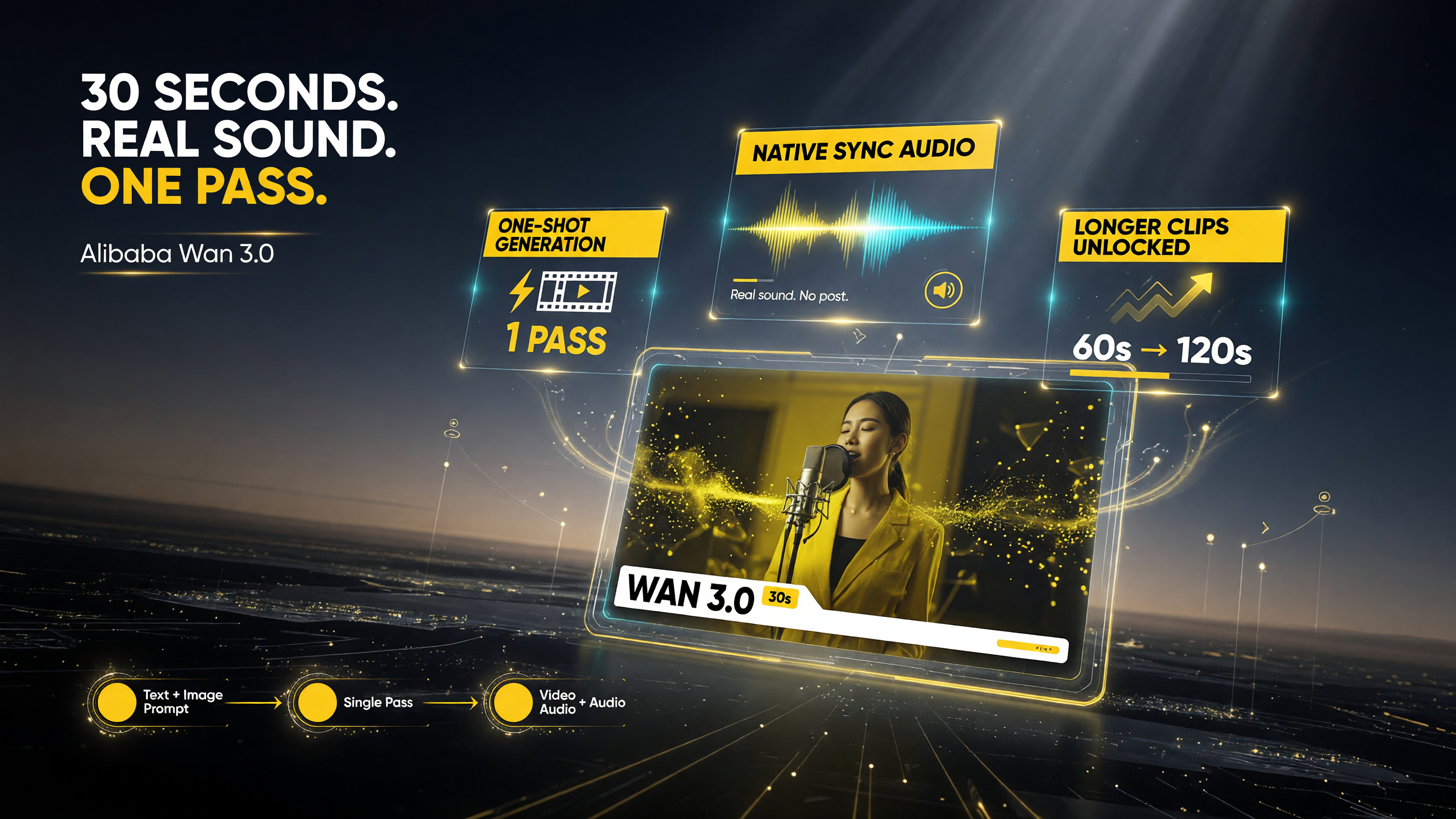
Wan 3.0 delivers up to 30 seconds in a single pass with native synchronized audio — text and image prompts in, video and sound out.
The Omni-Reference Advantage: Documents to Video
The feature that makes Wan 3.0 a different category of tool is Omni-Reference, its multimodal input system. Standard AI video tools mostly take a text prompt, sometimes a starting image. Wan 3.0 accepts:
- Text prompts — the baseline.
- Images — for style or subject references.
- Audio — to drive or sync the output.
- Video references — to match a look or motion.
- Documents — PDF, DOC, XLS/spreadsheets, PPT/slides, TXT.
- Webpage links/URLs — source material pulled straight from a link.
The practical payoff: you can turn a PowerPoint into an explainer video, convert a PDF report into a visual summary, or feed a spreadsheet and get video that walks through the data. For a creator or business producing training, pitch, or recap content, that collapses what used to be a multi-tool pipeline into a single generation step.
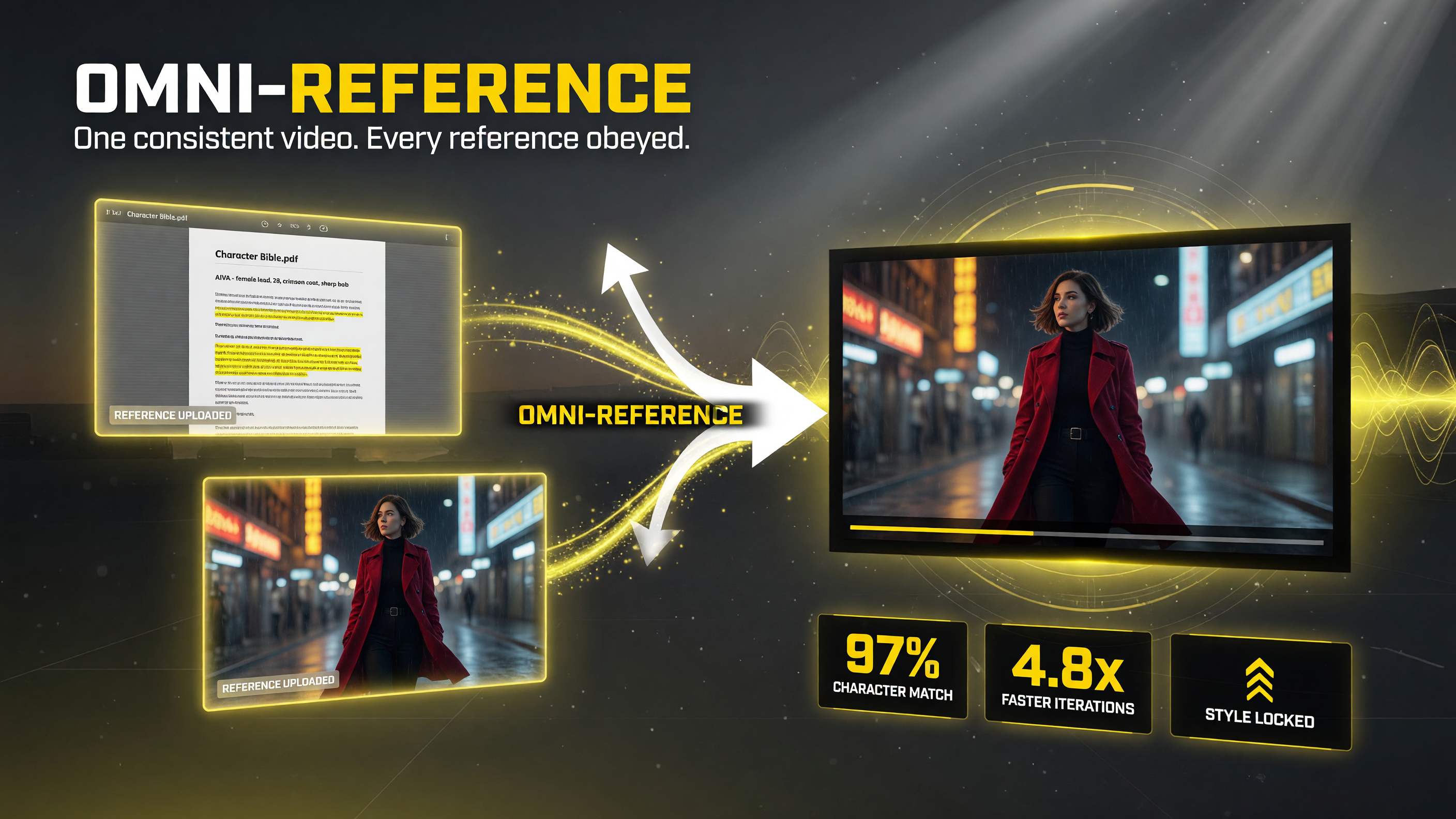
Omni-Reference locks character and style from a document or image, so every shot stays consistent across the clip.
How Wan 3.0 Compares to Other AI Video Generators
To see where Wan 3.0 sits, it’s useful to stack it against what most other tools offer today:
| Capability | Standard Generators | Wan 3.0 |
|---|---|---|
| Single-pass clip length | 5–15 seconds | Up to 30 seconds |
| Synchronized audio | Often separate step | Bundled in same run |
| Document input (PDF/PPT/XLS) | No | Yes (Omni-Reference) |
| URL input | Rarely | Yes |
| Resolution | Varies | Up to 1080p |
Table: How Wan 3.0’s capabilities differ from standard AI video generators. The big advances are clip length, bundled audio, and document/URL input.
It also emphasizes better character consistency, realism, motion/physics, and narrative coherence than Alibaba’s previous models — the areas that usually separate usable AI video from obviously-AI output.
What Wan 3.0 Costs per Second
Wan 3.0 is metered per second of generated video — there’s no unlimited free tier; the beta is paid and metered. International pricing through Alibaba Cloud Model Studio is straightforward:
- 480p: $0.05 per second — about $1.50 for a 30-second clip.
- 720p: $0.10 per second — about $3.00 for 30 seconds.
- 1080p: $0.20 per second — about $6.00 for 30 seconds.
China regional pricing (Beijing example) runs roughly ¥0.30 / ¥0.60 / ¥1.20 per second for 480p / 720p / 1080p, with Singapore-era endpoints around 20–25% higher. The per-second model is both a blessing and a discipline: you pay precisely for what you generate, which favors planning over re-rolling, but a long 1080p clip can add up quickly.
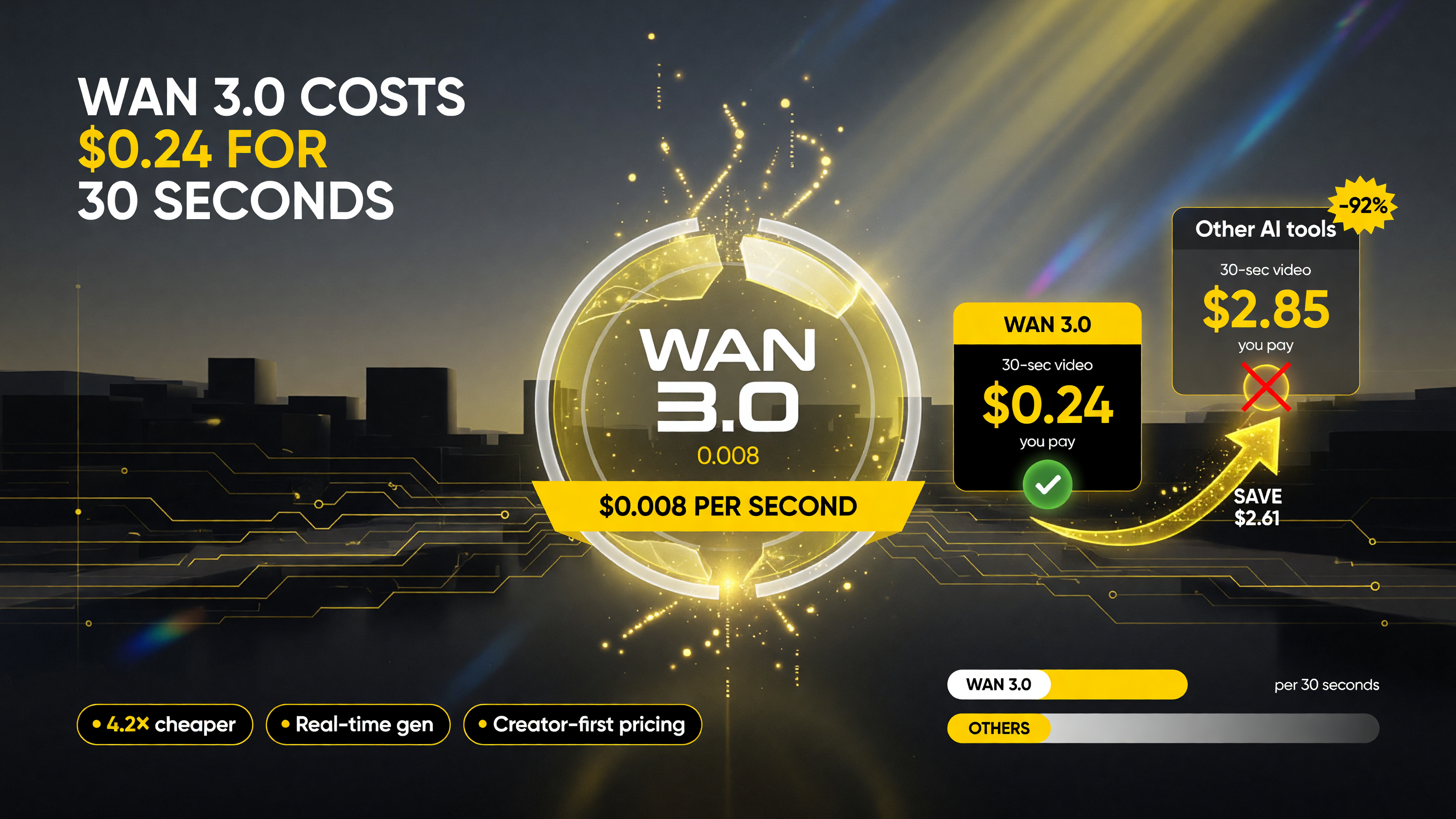
International API pricing runs $0.05–$0.20 per second depending on resolution — roughly $1.50 to $6.00 for a 30-second clip, on a transparent pay-per-second model.
Where to Access Wan 3.0
Wan 3.0 is available — or rolling out — through Alibaba Cloud Model Studio (Bailian), Qwen Cloud, and other Alibaba creative platforms like Wanjing Yike, the Qianwen app, and wan.video. In the public beta, access is often gated — invitation-only or by applying for testing (especially on Beijing/Singapore endpoints) — so “public beta” doesn’t always mean instant self-serve access in every region. API access with model ID wan3.0-video is live or imminent, which matters if you want to script it into an automated workflow rather than use a GUI.
For a creator, the practical move is to check which endpoint serves your region, apply early if access is gated, and set a clear budget per project before you start generating — because at these per-second rates, a short burst of careless re-rolls at 1080p can eat through a daily content budget faster than you expect.
Is Wan 3.0 Worth It for Creators?
Whether Wan 3.0 earns a place in your workflow depends on what you make:
- Longer narrative clips benefit most, since you get a full 30 seconds in one pass instead of stitching segments.
- Document-to-video work is its unique edge — if you routinely turn reports, decks, or spreadsheets into video, this collapses your pipeline.
- Auto-synced audio saves real time if you currently fight to match sound to generated visuals.
On the flip side, per-second metering means costs scale with length and resolution, and the gated public beta means not everyone gets instant access. Weighing it against US tools, Wan 3.0’s longer single-pass clips and document input make it a strong complement rather than a straight replacement — especially if you value plugging raw source material in and getting finished video out.
Bottom Line: Wan 3.0 Is the Multimodal Long-Form Contender
Alibaba’s Wan 3.0, in public beta since August 6, 2026, is a genuine step forward for AI video. Native 30-second single-pass clips, bundled audio, up to 1080p, and — most distinctively — Omni-Reference document and URL input set it apart from standard text-prompt generators. At $0.05–$0.20 per second, it’s a transparent, pay-for-what-you-use model that rewards intentional generations.
For creators, the takeaway is to watch for when self-serve access opens in your region, and to plan around its strengths: longer documentary-style pieces and turning documents into video. Whether it becomes your daily driver or a specialty tool alongside your existing stack, Wan 3.0 signals that the next chapter of AI video is about understanding more than a prompt — understanding your source material, at length, with sound.
Frequently Asked Questions
What is Alibaba Wan 3.0?
Wan 3.0 is Alibaba’s AI video generation model, which entered public beta on August 6, 2026. It generates native 30-second clips in a single pass (about double Wan 2.7’s ~15-second ceiling) at up to 1080p with synchronized audio, and supports multimodal input through its Omni-Reference system.
Can Wan 3.0 generate 30-second videos?
Yes. Wan 3.0 generates native up-to-30-second video clips in a single pass, roughly double the ~15-second limit of its predecessor Wan 2.7, at resolutions up to 1080p with audio synchronized in the same run.
What is Omni-Reference in Wan 3.0?
Omni-Reference is Wan 3.0’s multimodal input system. It accepts text prompts, images, audio, video references, documents (PDF, DOC, XLS, PPT, TXT), and webpage links/URLs, and can generate video directly from those sources — such as turning a PDF or PowerPoint into video content.
How much does Wan 3.0 cost?
Wan 3.0 is metered per second of generated video. International API pricing is $0.05 per second for 480p, $0.10 per second for 720p, and $0.20 per second for 1080p — roughly $1.50, $3.00, and $6.00 respectively for a 30-second clip. There is no unlimited free tier.
How do I access Wan 3.0?
Wan 3.0 is available or rolling out through Alibaba Cloud Model Studio (Bailian), Qwen Cloud, and other Alibaba platforms like Wanjing Yike, the Qianwen app, and wan.video. Public beta access is often gated (invitation-only or by application), with API access (model ID wan3.0-video) live or imminent.

About Barak Schurr
Barak Schurr is a serial entrepreneur who built and exited a major ticketing platform before turning his attention to AI and content. He runs three AI-focused research sites and writes about the tools, workflows, and strategies that let solo creators build real channels — without a crew, a studio, or a Hollywood budget. Contact: [email protected]
More AI Resources for Your Business