Pika API Club: $10 a Month for AI Video at Wholesale Prices
Get The Faceless YouTube Blueprint — Free
The exact AI tool stack and workflow used to build a faceless YouTube channel from zero.
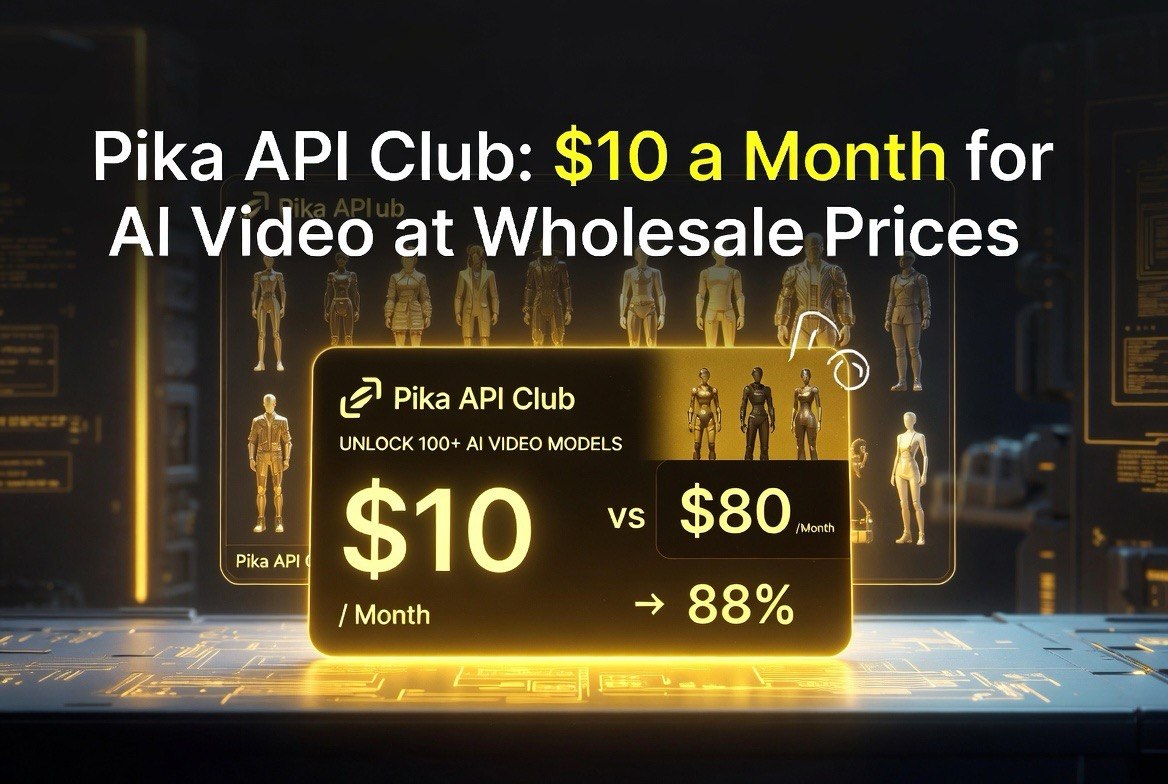
Pika API Club: $10 a Month for AI Video at Wholesale Prices
⚡ Expert Summary: Pika API Club is a $10-a-month membership that gives you wholesale-access pricing on 100+ generative media models (video, image, audio) through one API. Compared with pay-as-you-go aggregators like Fal.ai or Runway, member rates run up to 88% cheaper — Seedance 2.0 drops from $0.36/sec on Runway to $0.0452/sec here. For US creators and small teams burning through video generation credits, it is the closest thing to a Costco for AI media APIs. Launched August 4, 2026.
What Is Pika API Club?
Pika API Club is a membership program from Pika, the video-generation company behind the Pika 2.5 model, that launched on August 4, 2026. For a flat $10 per month, you get access to discounted “member” pricing across more than 100 leading generative-media models — video, image, audio, and multimodal — all through a single API at dev.pika.art.
The idea is simple and aggressive: Pika negotiates bulk rates with model providers and passes the savings to members, cutting out the typical 3x markup that aggregators add on top of direct pricing. In Pika’s own framing, it works like a Costco for generative-media APIs — you pay a modest membership fee and then buy usage at near-wholesale rates instead of paying per-call retail prices.
Critically, this is open to anyone, not just enterprise teams. A $10/month membership is within reach of a solo US creator, a small agency, or a side project, which is what makes it worth a serious look if you generate video regularly.
How the Pricing Actually Compares
The headline claim is up to 88% cheaper than other aggregators. When you look at specific per-second video pricing (including Pika’s roughly 5% platform fee), the numbers line up:
| Model & Mode | Pika API Club | Fal.ai | Runway | Savings |
|---|---|---|---|---|
| Seedance 2.0 (R2V 480P, per sec) | $0.0452 | $0.084 | $0.36 | Up to 87% off |
| MiniMax H3 (T2V 2K, per sec) | $0.13 | $0.26 | N/A | 50% off |
| Kling 3.0 (T2V 1080P, per sec) | $0.09 | $0.112 | N/A | 20% off |
The standout is Seedance 2.0. On Runway’s API you would pay $0.36 per second of 480P video; on Pika API Club the same output costs $0.0452 per second — an 87% reduction. That is the difference between a video that costs a few dollars to produce and one that costs pennies. Across the catalog, image and audio models show 20-58% savings versus the same aggregators, so the discount is not limited to video.
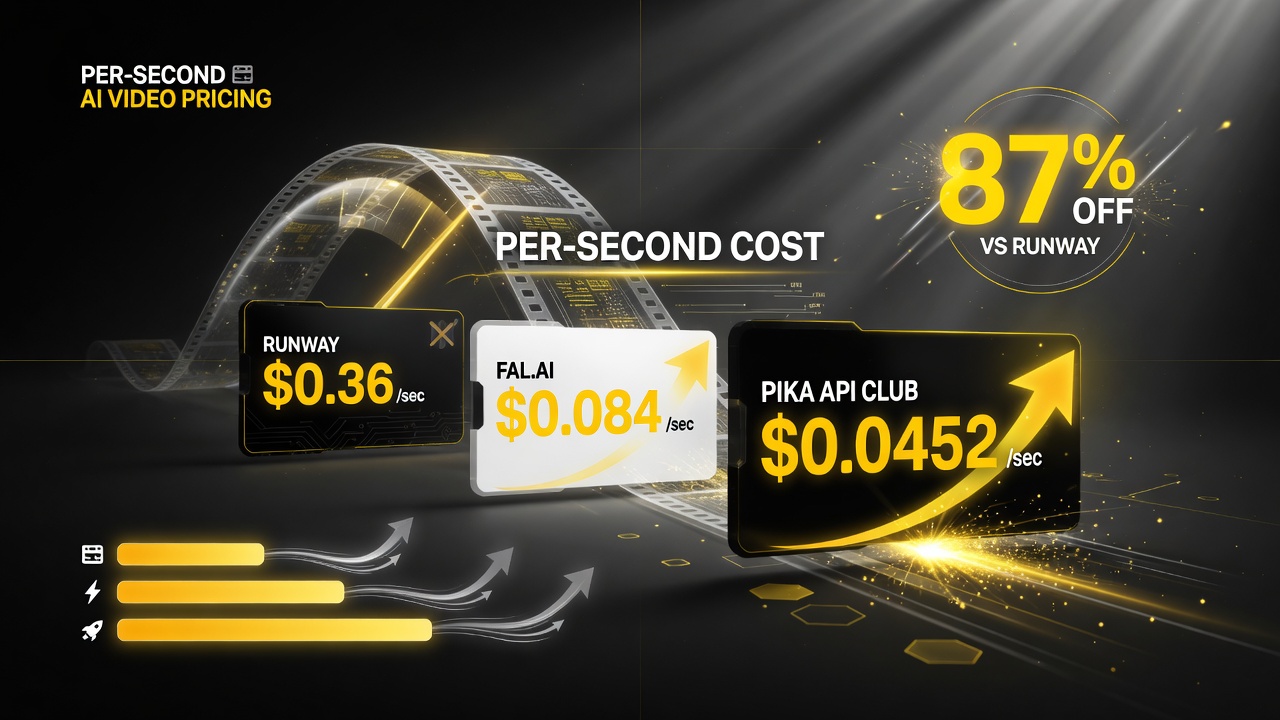
The same Seedance 2.0 clip costs 0.0452 dollars per second on the club versus 0.36 dollars on Runway — the 87% gap that drives the savings argument.
Which Models Are Included
The club is not a single-model deal. It aggregates models from top providers across the generative-media landscape, including Pika’s own models, so you can mix and match a full production pipeline from one account:
- Video: Seedance 2.0, MiniMax H3, Kling 3.0, Pika 2.5, Veo 3.1, LTX, Grok Imagine Video, and more.
- Image: leading image-generation models at 20-58% savings vs. their usual aggregator pricing.
- Audio: including ElevenLabs voice and audio models, with the same discounted member rates.
- Multimodal: models that handle multiple modalities through the single API.
Having all of these behind one API matters operationally. Instead of juggling separate accounts, keys, and billing cycles for video, image, and audio, you standardize on one endpoint and one set of credentials. For automated workflows, that is a meaningful reduction in moving parts.
Why the $10 Club Model Matters for Creators
The generative-media market has a structural problem: resellers and aggregators often add a hefty markup on top of already-expensive per-generation pricing, and small creators absorb it because they lack the volume to negotiate. Pika API Club attacks that by aggregating demand across many members and negotiating wholesale rates everyone can access.
For a US creator or agency generating hundreds of clips a month, the savings are not cosmetic. If you are currently paying Runway or Fal.ai rates for a steady video workload, moving to member pricing can cut your production spend by a meaningful amount each month, while the $10 membership fee becomes trivial by comparison. Even at the 20% end of the range, the math works out for anyone generating video more than occasionally.
The reason the club works is a model that is spreading across the AI tooling market: flat-rate membership buying power. Instead of paying retail per generation, members pool demand so the operator can negotiate volume discounts from model providers. That flips the usual unit economics — the more you generate, the more you save, which rewards exactly the creators doing the heaviest real production work rather than punishing them for it.

Member discounts vary by model: deep cuts on Seedance 2.0, moderate on MiniMax H3, and smaller-but-real on Kling 3.0.
One API Beats Five Accounts
There is a second, quieter benefit that does not show up in a pricing table: consolidation. Most creators working across video, image, and audio maintain separate accounts, API keys, and billing relationships with multiple vendors. That creates drift — different prompt conventions, separate quotas, and a patchwork of invoices every month.
Pika API Club collapses that into a single endpoint and a single credential set. You log in once at dev.pika.art, get one key, and route every generation type through it. For anyone building scripts, automations, or agent workflows, fewer keys means fewer failure points and less code to maintain. It also makes cost tracking simpler, because all your generative-media spend lands on one statement instead of several.
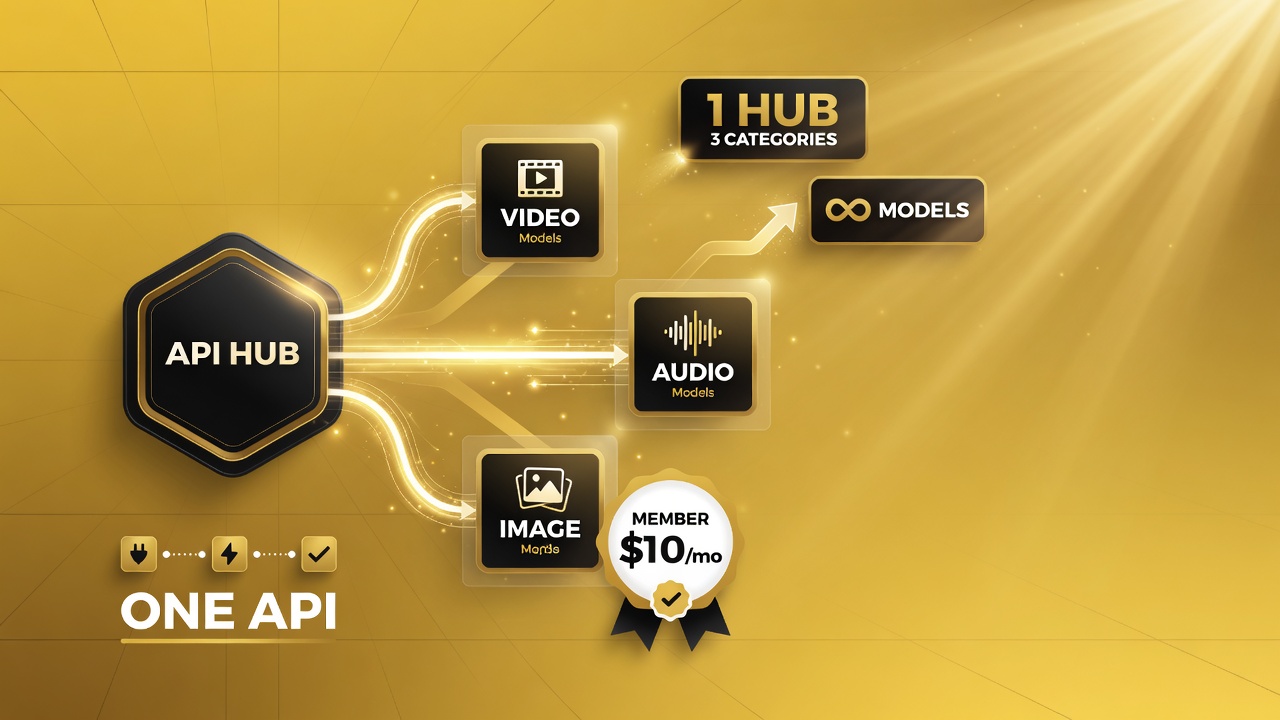
One endpoint replaces several accounts — video, image, and audio generation all run through a single API key at member pricing.
This consolidation is especially valuable for small teams that would otherwise need an API management layer just to keep track of which tool does what. The club effectively builds that layer in, so a one- or two-person operation gets the kind of unified access that used to require dedicated engineering.
Who Should Sign Up Now
- If you generate video weekly or daily, this is the clearest win — the usage you already pay roll for drops immediately, especially on Seedance 2.0-class workloads.
- If you build AI tools or agents, the club is explicitly “agent-native,” designed to integrate into ChatGPT, Claude, or code workflows via one API, with commercial use allowed.
- If you run a small agency, consolidating video, image, and audio generation on one discounted API simplifies both billing and prompt-to-asset pipelines for client work.
- If you only occasionally make a clip, the $10 membership plus pay-as-you-go still saves you on each generation, but the win is smaller — test it before committing to a heavy workflow.
How to Get Started With Pika API Club
- Join at dev.pika.art. The $10/month membership is open to anyone and comes with a $10 usage credit for new members in the first month, so you can test member pricing risk-free before buying significant volume.
- Check the pricing calculator. Pick the specific models you actually use — video, image, or audio — and confirm the per-second or per-call member rates against what you pay today on Fal.ai, Runway, or your current aggregator.
- Standardize one API key. Route your prompt-to-asset workflow through the single endpoint so you get member pricing everywhere instead of mixing discounted and full-price calls.
- Scale only what saves you. If your heaviest model shows 87% savings but a secondary one only 20%, shift the high-volume work over first and measure the monthly bill before moving everything.
What to Watch For
Pika API Club is brand new as of August 4, 2026, and member pricing is a promotional launch position, so a few caveats are worth holding in mind. First, the deep 87-88% figures are showcased at launch; ongoing rates after the member-launch period may shift. Second, the models are third-party via Pika, so availability and per-provider limits can change as the catalog matures. Finally, commercial use is permitted, but read your own compliance needs before shipping client work on member pricing.
The practical read on these risks is not to avoid the club, but to enter with a testing mindset. Run a real project through it before you commit your whole pipeline, and keep an eye on whether the launch pricing holds at renewal. If the discounts persist, the club becomes a durable cost lever; if launch rates fade, you have lost only the $10 fee and a small amount of testing effort.
Even with those caveats, the direction is unmistakable. Wholesale-style membership pricing is coming to the generative-media API market, and the creators who consolidate their spend onto a discounted single API stand to keep more of their production margin. For anyone in the US generating video, image, or audio at real volume, Pika API Club is worth testing in this launch window.
Frequently Asked Questions
What is Pika API Club?
Pika API Club is a $10-per-month membership launched August 4, 2026, that gives members discounted “wholesale” pricing on 100+ generative-media models — video, image, and audio — through a single API at dev.pika.art.
How much does Pika API Club cost?
The membership is $10 per month and includes a $10 usage credit for new members in the first month. After that you pay as you go at the discounted member rates, and you can cancel anytime.
How much can you save with Pika API Club?
Pika reports member pricing up to 88% cheaper than other aggregators. For example, Seedance 2.0 (R2V 480P) costs $0.0452/sec on the club versus $0.36/sec on Runway — about 87% off. MiniMax H3 runs 50% cheaper than Fal.ai, and Kling 3.0 about 20% cheaper.
Which models are on Pika API Club?
The club includes 100+ generative-media models, covering video (Seedance 2.0, MiniMax H3, Kling 3.0, Pika 2.5, Veo 3.1, LTX, Grok Imagine Video), image, audio (including ElevenLabs), and multimodal models through one API.
Is commercial use allowed on Pika API Club?
Yes. The service is agent-native and designed for integration into tools like ChatGPT, Claude, and coding platforms, and commercial use is permitted. Check the terms at dev.pika.art for your specific use case.

About Barak Schurr
Barak Schurr is a serial entrepreneur who built and exited a major ticketing platform before turning his attention to AI and content. He runs three AI-focused research sites and writes about the tools, workflows, and strategies that let solo creators build real channels — without a crew, a studio, or a Hollywood budget. Contact: [email protected]
More AI Video Resources