Meta Muse AI Video — Avatar Generator with Face Cloning
Get The Faceless YouTube Blueprint — Free
The exact AI tool stack and workflow used to build a faceless YouTube channel from zero.
Meta Muse Video AI — Hands-On with Meta’s New Avatar Video Generator
⚡ Expert Summary: On July 7, 2026, Meta launched Muse — a new AI video generation model capable of creating personalized avatar videos by combining user photos with video synthesis. The tool lets users create custom videos featuring cloned faces, animated characters, and full video scenes generated from text descriptions and reference images. It marks Meta’s strongest entry yet into the consumer AI video space, but the technology has already raised questions about privacy, consent, and deepfake risks.
What Is Meta Muse?
Meta Muse is a text-to-video and image-to-video model developed by Meta’s AI research division. It works differently from most AI video generators on the market. Where tools like Runway, Kling, and Sora generate original video content from text prompts alone, Muse focuses heavily on personalization and avatar generation.
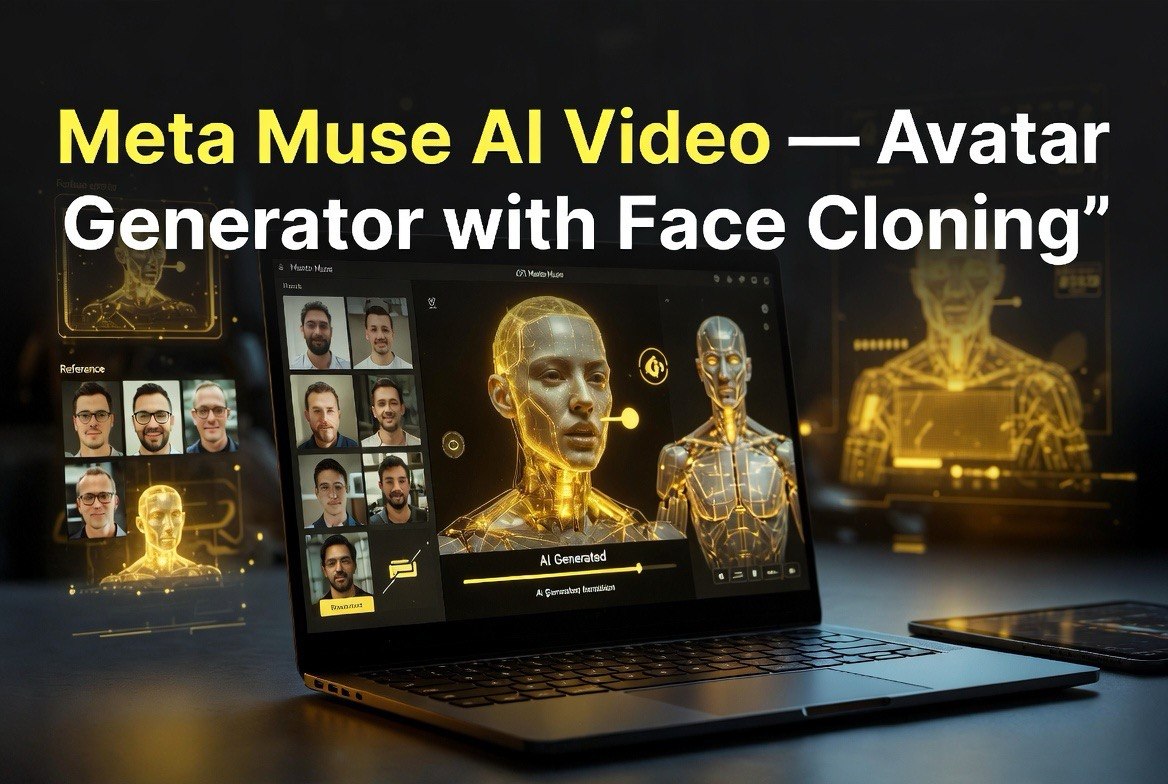
The core feature is what Meta calls “face cloning” — uploading a reference photo of a person and generating video content that features that person’s face and expressions in entirely new scenarios. Think of it as the video equivalent of those AI-generated profile picture apps, but for full-motion video.
Key capabilities include:
Avatar video synthesis. Upload a photo of yourself, and Muse can generate a video of you speaking, moving, or performing actions described in a text prompt. The model maps facial features from the reference image onto AI-generated body movements and expressions.
Text-to-video generation with personalization. Standard text-to-video generation is also included, but the standout feature is the ability to inject a specific person’s likeness into generated scenes. This goes beyond simple face swapping — the model maintains consistent facial identity across the full clip.
Multi-image reference support. Users can upload multiple reference photos of the same person to improve accuracy. The more reference angles and expressions provided, the better Muse reproduces the person’s appearance in generated video.
How Muse Compares to Other AI Video Tools
| Feature | Meta Muse | Seedance 2.5 | Veo 3.1 |
|---|---|---|---|
| Face cloning / avatars | Yes — core feature | Limited | No |
| 4K resolution | Up to 1080p | Native 4K | Up to 4K |
| Maximum clip length | ~15 seconds | 30 seconds (beta up to 3 min) | ~60 seconds |
| Native audio | Yes | Yes | Yes |
| Personalization | Excellent — designed for this | Good — 50 reference images | Moderate |
| Privacy controls | Under scrutiny | Standard | Enterprise-grade |
Who Is Meta Muse For?
Meta Muse targets a different audience than most AI video tools. While Seedance, Veo, and Kling focus on filmmakers, marketers, and content creators producing high-quality video assets, Muse is aimed at a broader consumer and creator audience interested in personalized video content.
The most obvious use cases include:
Social media content creators. Influencers and content creators on Instagram, Facebook, and TikTok can generate avatar-based videos without filming themselves. A creator can upload their photo and generate multiple video variations for different platforms without spending hours in front of a camera. Given Meta’s ownership of Instagram and Facebook, tight platform integration is expected.
Personalized marketing videos. Small businesses can create video messages featuring a consistent brand face or character without hiring actors or video production teams. A local business owner could generate a video greeting, a product demo, or a promotional message using their own likeness generated by AI.
Entertainment and storytelling. Users can generate video scenes featuring themselves or others in fictional scenarios — appearing in a movie trailer, giving a speech, performing an action. The creative possibilities are broad, even if the ethical boundaries are still being defined.
The Privacy and Consent Questions
Meta Muse’s face cloning capability is the most powerful feature of the tool — and the most controversial. The ability to generate realistic video of a person’s face from a single photo raises obvious concerns about consent, deepfakes, and misuse.
Meta has implemented some safeguards. The system requires user authentication and logs all generated videos for audit purposes. There are content moderation filters that block certain types of prompts and limit the use of celebrities’ and public figures’ likenesses without authorization. But these protections are only as strong as the enforcement behind them.
For content creators in the United States, the practical concerns are more immediate:
Can someone create a video of you without your permission? Currently, the system requires the person uploading a reference photo to have an account and accept terms of service. But if someone has a photo of you, they can use it as input. The output is flagged as AI-generated, but the flag is only visible in the metadata, not necessarily obvious to viewers.
What about music industry rights? Meta Muse can generate synchronized audio with facial movements, raising questions about whether generated videos featuring singing or speaking in someone’s likeness implicates their right of publicity — which varies significantly by US state.
Platform moderation. Meta has not yet detailed how it will handle misuse on its social platforms. If a generated video goes viral on Instagram or Facebook, how quickly will Meta detect and remove unauthorized uses? The company’s track record on content moderation suggests this will be an ongoing challenge.
Should Video Creators Use Meta Muse?
For content creators and small businesses looking to produce personalized video at scale, Meta Muse offers legitimate creative potential. A business owner could generate a weekly video newsletter featuring their avatar, saving hours of production time while maintaining a personal touch. A content creator could produce multiple avatar-based videos for A/B testing different messaging without reshooting.
The key is using it ethically and transparently. If the person whose likeness is being used has given clear consent, and the video is clearly labeled as AI-generated, Muse is a powerful production tool. The problems start when those conditions aren’t met.
For professional video creators who need high-quality, original AI video content for client work, tools like Seedance, Veo, and Runway remain better options. Muse is not trying to compete with those tools on cinematic quality — it’s competing for the personalized avatar and social video market.
How Meta Muse Fits Into Meta’s Broader AI Strategy
Meta Muse is not an isolated product launch. It is part of Meta’s broader push to integrate generative AI across its entire ecosystem. Mark Zuckerberg has been vocal about Meta’s goal to become a leader in creative AI tools, and Muse represents the video component of that vision — complementing Meta’s image generation tools (Imagine) and text-based AI assistants.
The strategic logic is clear: Meta owns Instagram, Facebook, and WhatsApp — three of the largest platforms for sharing video content in the world. If Meta can make AI video creation frictionless within those platforms, it captures the entire pipeline from creation to distribution. Users never leave the Meta ecosystem. That is a powerful position, and it is exactly the same playbook Meta used with Reels to compete with TikTok.
For creators who already have a presence on Instagram or Facebook, Muse offers seamless integration potential. Videos generated through Muse could be posted directly to the platform without download-upload friction. The AI-generated label would be attached automatically, and the video would be subject to the same platform moderation policies as user-uploaded content.
This integration advantage is Muse’s strongest competitive moat. A creator choosing between Seedance and Muse is not just choosing video quality — they are choosing between a standalone tool and a platform-integrated ecosystem. For creators whose primary distribution is Instagram, the integration advantage may outweigh the quality gap.
The advertising angle. Meta’s business model is advertising. AI video generation tools that make it cheaper and faster to produce video ads directly serve Meta’s core revenue engine. Businesses using Muse to create short video ads for Instagram and Facebook are effectively using Meta’s tools to buy Meta’s ad inventory. The flywheel is obvious, and it suggests Meta will continue investing heavily in Muse’s capabilities.
For video creators in the United States evaluating Muse, this ecosystem integration is both an opportunity and a consideration. The convenience is real. The lock-in risk is also real. If your video creation workflow becomes dependent on Meta’s tools, migrating to another platform later becomes more difficult. Evaluate Muse for what it offers today — but be aware of the switching costs that come with deep ecosystem integration.
FAQ
When was Meta Muse released?
Is Meta Muse free to use?
Can someone make a video of me without my permission?
How does Muse compare to Seedance for video creators?
Does Muse require a Meta account?

About Barak Schurr
Barak Schurr is a serial entrepreneur who built and exited a major ticketing platform before turning his attention to AI and content. He runs three AI-focused research sites and writes about the tools, workflows, and strategies that let solo creators build real channels — without a crew, a studio, or a Hollywood budget.
Email: [email protected]