Plot’s AI Now Vets Creators by Watching Their Videos — What It Means for YouTube Creators
Get The Faceless YouTube Blueprint — Free
The exact AI tool stack and workflow used to build a faceless YouTube channel from zero.
Plot’s AI Now Vets Creators by Watching Their Videos — What It Means for YouTube Creators
⚡ Expert Summary: Plot, a video-intelligence platform, launched a new AI tool that evaluates creators by analyzing the actual content of their videos rather than relying on subscriber counts, engagement rate, and self-reported media kits. The news landed on September 18, 2026. For solo YouTube creators, this is the most consequential shift in brand-deal evaluation since the media kit became standard: the pitch deck stops mattering and the work starts speaking. Creators whose audience quality and content depth beat their metrics are the biggest winners. Creators coasting on a big sub count with hollow watch time are the biggest losers.
Every solo creator eventually learns the same uncomfortable lesson about brand deals. You spend a weekend building a beautiful media kit — subscriber count, average views, engagement rate, audience demographics, a polished rate card. You send it to a dozen brands. And you slowly realize that the brand on the other side has almost no way to verify any of it beyond your own numbers and a glance at your last three thumbnails.
That era is ending. Plot, a video-intelligence platform that analyzes social video content at scale, launched a new AI tool that evaluates creators by examining what is actually inside their videos — the subject matter, the production quality, the topical consistency, the audience a video genuinely reaches — rather than trusting the metrics a creator reports about themselves. The tool was announced on September 18, 2026. The implications for how brand partnerships get decided run deeper than most creators realize right now.
What Plot’s Creator Vetting Tool Actually Does
Plot’s core business is video intelligence: software that watches video content and extracts structured understanding from it — what a video is about, who it speaks to, what products or themes appear, and how the content performs against the audience it targets. The company raised $10 million to give brands visibility into social video that mentions their products but never tags them, and it works with enterprise brands to unlock creator partnerships that traditional search misses.
The new creator-vetting tool applies that same machinery to the creator evaluation problem. Instead of reviewing a submission list against follower counts, a brand can hand Plot a set of creators and get back an analysis grounded in the videos themselves. That means the evaluation is based on content signals: does this creator’s actual work match the brand, does their audience appear to be the audience the brand wants, is the content consistent over time, and does the video quality support a professional campaign.
This is a structural change, not a feature update. Brand-deal decisions have historically rested on self-reported data because verifying content at scale was too expensive and too slow for a marketing team to do by hand. AI made that verification cheap. Once verification is cheap, the entire basis of creator selection shifts from claims to evidence.
| Evaluation Factor | Old Way (Media Kit) | New Way (AI Video Analysis) |
|---|---|---|
| Audience size | Self-reported subscriber count | Actual reach of the content analyzed |
| Brand fit | Creator’s own description of their niche | Topics and themes detected in the videos |
| Audience quality | Engagement rate screenshot | Comment and retention signal from content |
| Production standard | Three best thumbnails | Quality across the analyzed catalog |
| Verification cost | Too high to check manually | Cheap enough to run on every list |
Read the last row closely. That single change — verification becoming cheap — is what makes every other row in that table real instead of aspirational.
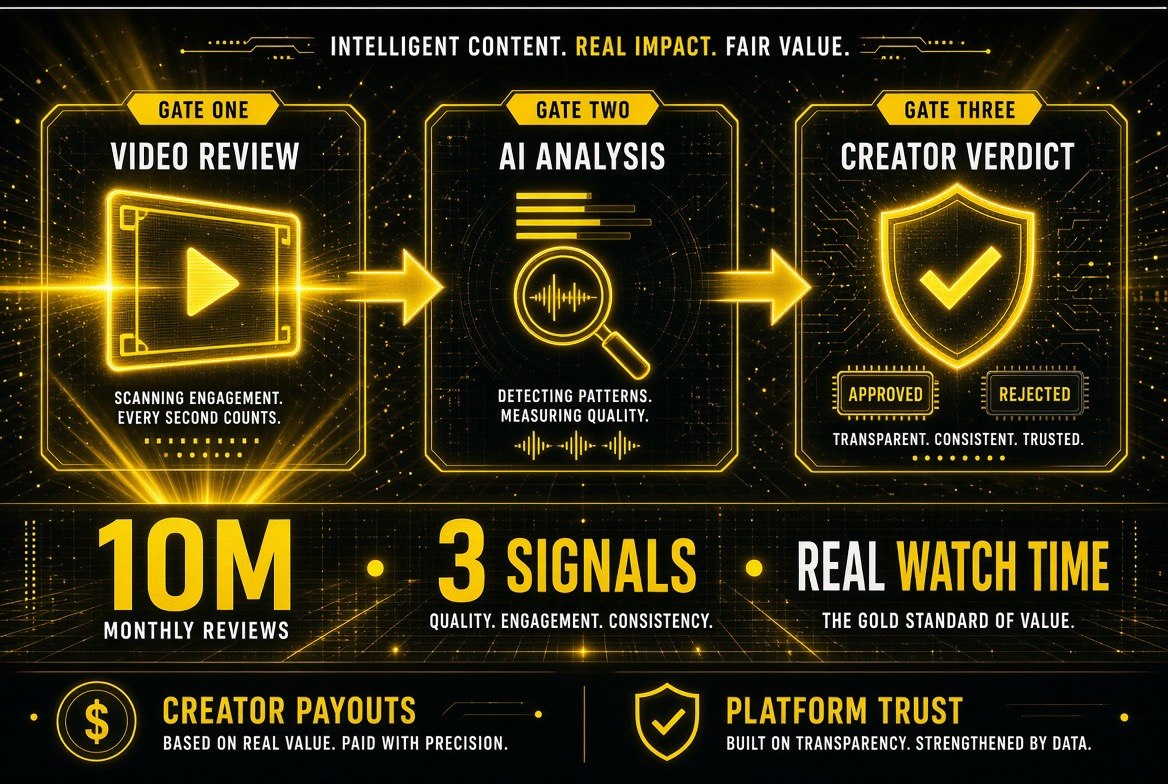
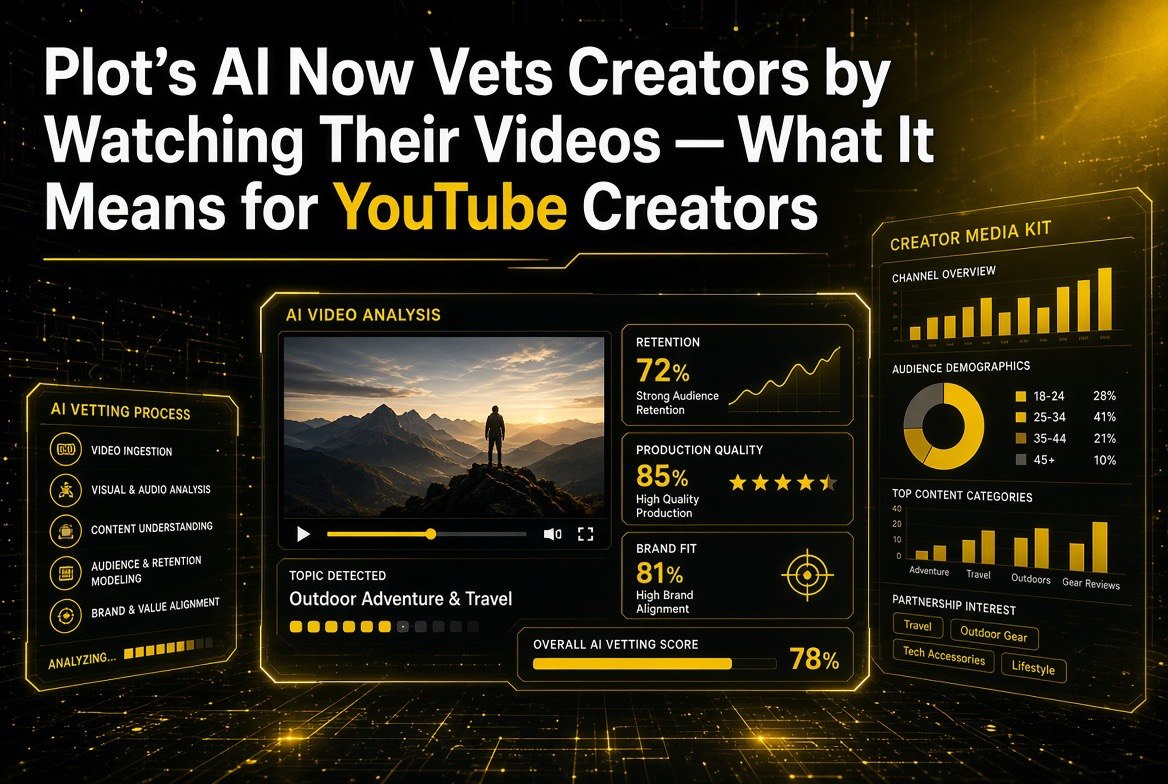
How the vetting pipeline is structured: an AI reviews the actual video, scores it across quality, engagement and consistency, and issues a verdict that feeds directly into creator payouts.
Why Brands Wanted This So Badly
Brand-side frustration with creator marketing is not a secret inside the industry. The core problem is attribution and verification. A marketing team working with fifty or a hundred creators has no efficient way to confirm that the audiences being sold to them are the audiences they are actually reaching, that the content context is appropriate, or that a creator’s recent trajectory matches the last campaign they ran.
That gap produced a predictable set of workarounds, none of them good. Brands over-weighted follower count, which rewarded buying followers. They under-weighted content quality, which punished small creators making excellent work. They relied on agencies that relied on the same self-reported numbers, layering a fee on top of a data problem. And they wasted significant budget on creators whose metric profile looked great and whose actual content fit was poor.
An AI tool that analyzes the video itself solves the verification problem at the root. For brands, that means less wasted spend and better campaign fit. For creators, the meaning is more personal: the evaluation you have spent years optimizing for is being replaced by an evaluation you cannot fake.
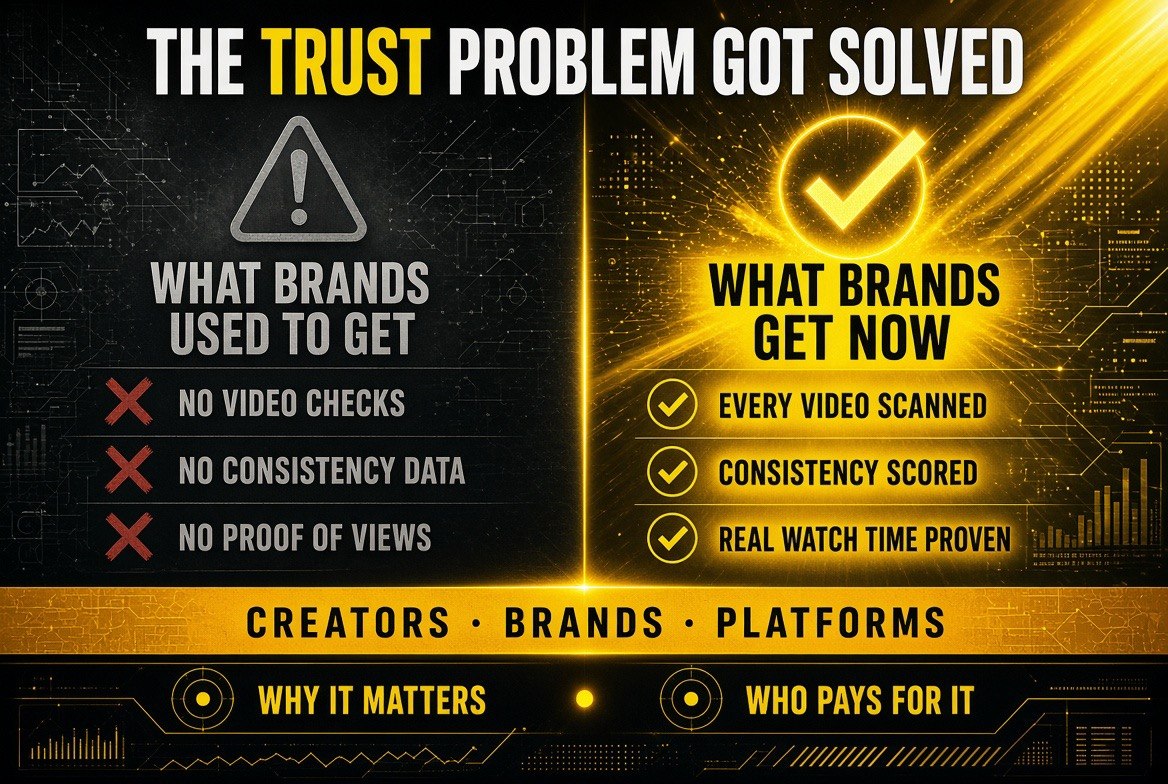
Why brands pushed for this: the left side is what sponsorship vetting looked like without video-level data, the right side is what an AI review pass actually verifies before money changes hands.
Who Wins and Who Loses
When creator evaluation shifts from claims to evidence, outcomes reshuffle fast. This is the part worth planning around rather than reacting to.
Winners: creators whose content overperforms their metrics. If your videos are well-made, topically consistent, and reach an engaged audience, but your subscriber count is modest, AI vetting is a promotion. You were previously invisible to brands scanning for scale. Now a system that watches your work can find the quality and the fit that a sub count obscured.
Winners: niche creators with deep, specific audiences. A creator with 40,000 subscribers who covers one subject for one type of viewer is now easy to match to a brand that wants exactly that viewer. Content analysis can detect topical specificity with a precision no media kit could communicate.
Losers: creators with inflated metrics and thin content. Purchased followers, engagement pods, and clickbait that drives views without retention all look the same to a system that actually watches the video. If your metric profile is much stronger than your content, the new evaluation will expose the gap.
Losers: creators who coast on a past hit. Catalog-level analysis sees consistency, not just a single breakout video. A creator whose last two years are weaker than the video that made them will be evaluated on the whole body of work.
How Creators Should Adapt Right Now
The response to content-based evaluation is not to game it. AI analysis of video content is expensive to fool and gets harder to fool every quarter. The response is to make the underlying content strong and legible, so the analysis finds what you want it to find.
Make your niche unmistakable in the content itself. If a system watches ten of your videos, can it determine your subject without reading a description? Name your topics out loud, repeat your core frame, and keep your format consistent. Topical clarity is now an asset that shows up directly in your evaluation.
Audit your catalog before a brand does. Watch your own last twenty uploads as a stranger would. Where does quality drop? Where does the topic wander? Where does the audio or lighting fall below the standard a brand campaign needs? Fix the weakest visible work, or remove it from the front of your channel. Most creators have never done this seriously.
Replace the media kit with a content portfolio. Your media kit should still exist, but it should now lead with evidence rather than claims: your three strongest recent videos with a one-line explanation of the audience and the result, plus a clear statement of what your channel covers and who it serves. Make the claims verifiable, because they now will be verified.
Invest in retention, not just views. A tool analyzing content cares about whether viewers actually watch. A creator who produces videos that hold attention across the runtime is worth more to a brand than one who produces viral thumbnails with a 20-second drop-off. Prioritize the opening thirty seconds and the through-line of every video.
Get discoverable in video search, not just platform search. Plot’s origin story is about untagged social video — content that mentions a product or theme without ever saying the name. That same principle applies to creators: if your videos are about your niche without clearly stating the terms, the analysis has less to work with. Say the words.
| Creator Position | Impact | Action |
|---|---|---|
| Strong content, modest subs | Big winner — quality now visible | Pitch harder; lead with content proof |
| Inconsistent catalog | Penalized on evidence | Tighten niche and upload standard |
| Inflated follower count | Exposed by analysis | Build real retention before pitching |
| Niche specialist | High brand-match value | Name the niche explicitly in video |
Why This Is Not Just a Brand-Side Tool
It is tempting to read a tool like this as purely a brand advantage — better targeting, less wasted spend, more leverage over creators. That reading is incomplete, and it misses the part that matters most for a solo creator building a channel.
Content analysis cuts both ways. A brand can use it to evaluate a creator, but a creator can use the same logic to evaluate their own channel. For the first time, the tools that big marketers use to judge creative work are conceptually available to the independent operator too: analyze the content, extract the signals, measure the fit. The creator who understands what those tools look for has a durable advantage over the creator who keeps optimizing a media kit nobody fully trusts.
There is also a discipline benefit. When you know your work will be evaluated on the content itself, the incentive shifts away from the tactics that inflate vanity metrics and back toward the craft that builds a real audience. That is a healthier equilibrium for the whole ecosystem — brands get better matches, audiences get better content, and creators who do the work get paid for doing it well rather than for winning a numbers game.
The platform dynamics reinforce the same direction. Recommendation systems across the major video platforms already weight watch time and viewer satisfaction more heavily than raw clicks. AI evaluation on the brand side is simply the commercial layer catching up to how the audience layer already works. Both reward the same thing: content that actually holds a viewer. A creator who aligns with that on the platform side is naturally aligned on the brand side too.
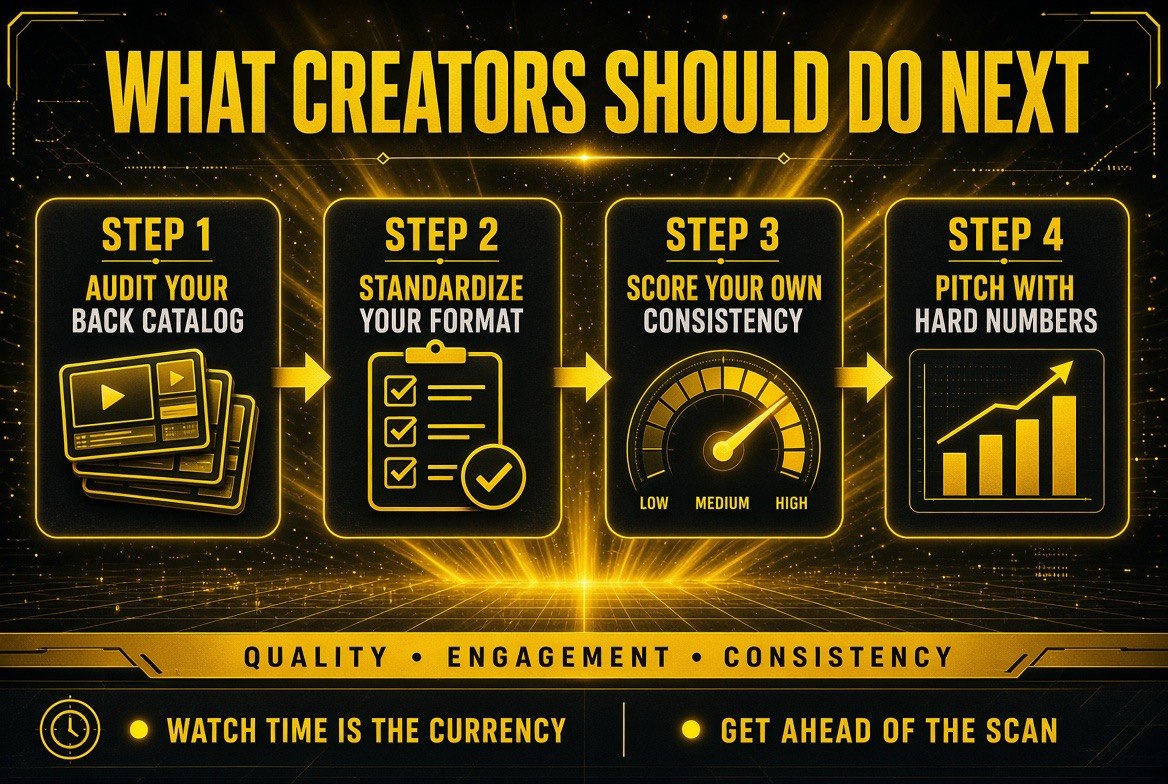
The four moves that put creators ahead of the scan: audit what you already have, standardize the format, score your own consistency, then pitch brands with hard numbers instead of reach claims.
What This Signals About Where Creator Monetization Is Going
Step back and this tool is one more data point in a clear directional trend: the creator economy is being rebuilt on measurable content quality rather than proxy metrics. The same shift is happening inside the platforms. Recommendation systems increasingly reward watch time and satisfaction over raw clicks. AI tools now score creative work before a human ever sees it. And the brand side is adopting that same infrastructure for partnership decisions.
For a solo creator, that direction is mostly good news. It rewards the thing you actually control — the quality and focus of the work — over the thing you can only manipulate through tricks that get caught. The creator with a small, loyal, specific audience now has a system that can identify that value and put it in front of the brands that need it.
The practical takeaway is simple and unsentimental. The pitch deck is not dead, but it is no longer the deciding factor. Your content is. Make it clear what you make, make it well, make it consistent, and let the analysis find what you have built. That is a better game for anyone who got into this to make things rather than to work an algorithm.
Frequently Asked Questions
What is Plot’s new AI creator vetting tool?
Plot launched an AI tool that evaluates creators by analyzing the actual content of their videos — subject matter, production quality, topical consistency, and audience reach — instead of relying on self-reported metrics like subscriber counts and media kits. It was announced on September 18, 2026.
How does AI creator vetting affect YouTube creators looking for brand deals?
It shifts brand-deal decisions from claims to evidence. Creators whose content quality exceeds their metrics gain visibility, and creators with inflated follower counts or inconsistent catalogs are exposed. Your videos, not your pitch deck, become the deciding factor.
Can creators game AI video analysis the way they game media kits?
Not effectively. AI analysis of video content is expensive to fool and improves every quarter. The reliable strategy is to make the underlying content strong and topically clear so the analysis finds genuine quality, rather than trying to trick the system.
What should a small creator do first to prepare for AI vetting?
Audit your last twenty uploads as a stranger would, fix or hide your weakest visible work, and make your niche explicit inside the video content. Then rebuild your media kit around verifiable content proof rather than self-reported numbers.
Does AI vetting help niche creators with small audiences?
Yes. Content analysis can detect topical specificity and audience fit with a precision no media kit can communicate, which makes niche creators with engaged, loyal audiences far easier for a brand to identify and match.

About Barak Schurr
Barak Schurr is a serial entrepreneur who built and exited a major ticketing platform before turning his attention to AI and content. He runs three AI-focused research sites and writes about the tools, workflows, and strategies that let solo creators build real channels — without a crew, a studio, or a Hollywood budget.
Email: [email protected]
More AI Video Resources