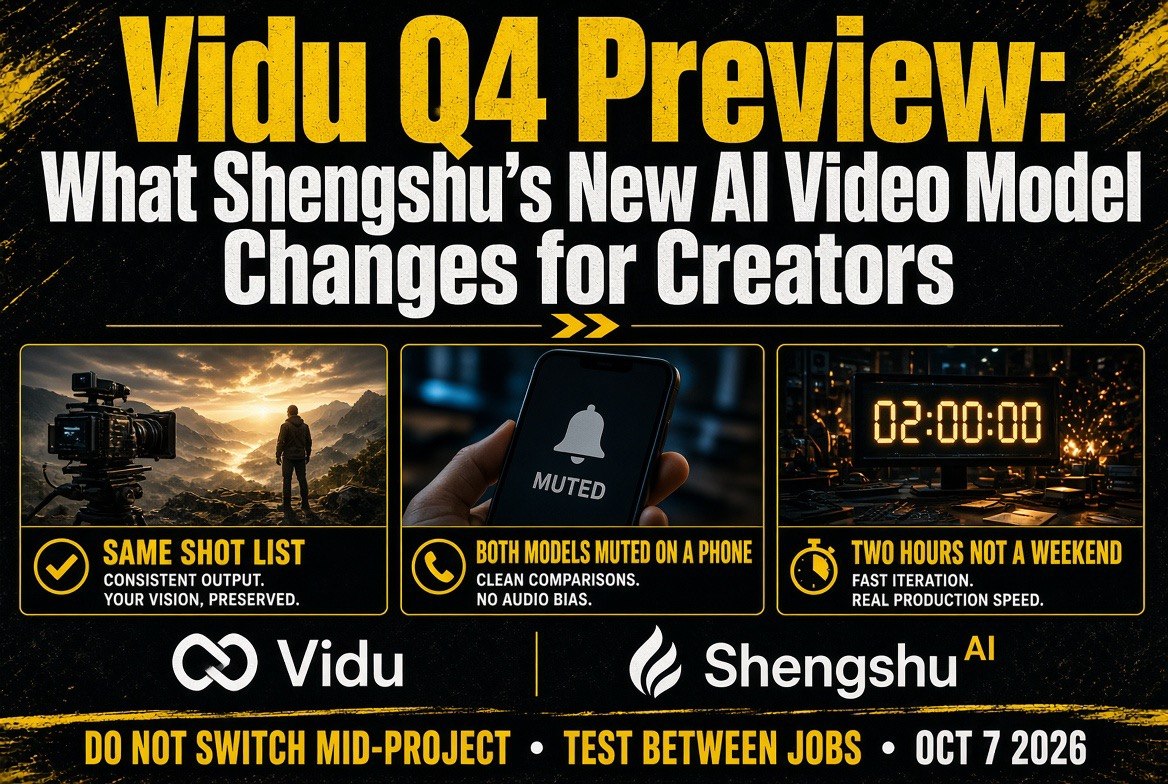
Vidu Q4 Preview: What Shengshu’s New AI Video Model Changes for Creators
Get The Faceless YouTube Blueprint — Free
The exact AI tool stack and workflow used to build a faceless YouTube channel from zero.
Vidu Q4 Preview: What Shengshu’s New AI Video Model Changes for Creators
⚡ Expert Summary: Shengshu Technology launched Vidu Q4 Preview on October 7, 2026 — a next-generation AI video model built for creators rather than enterprises. The pattern is now familiar and worth understanding: Chinese video labs are shipping capability updates on a monthly cadence while Western studios ship on a yearly one. For a solo creator, that cadence is the actual product.
Another AI video model shipped this week. If you are a solo creator, the reflex is to ignore it — you have already picked a tool, you already know its quirks, and switching costs you a weekend you do not have.
That reflex is usually correct. But there is a specific reason this release is worth ten minutes of your attention, and it has nothing to do with this model in particular.
What Vidu Q4 Preview Actually Is
Shengshu Technology launched Vidu Q4 Preview on October 7, 2026, positioning it as a next-generation AI video model built for creators. Shengshu is the Chinese lab behind the Vidu platform, which has been one of the more consistent entrants in the text-to-video and image-to-video category.
The “Preview” label carries real information. It means the model is available for evaluation before a general release, which is how this lab has historically shipped — fast iterations, public testing, rapid corrections.
For a creator, a preview release is genuinely useful. You get to test capability before it becomes the default that every tool wraps, and you get to find out whether it fits your workflow before the pricing settles.
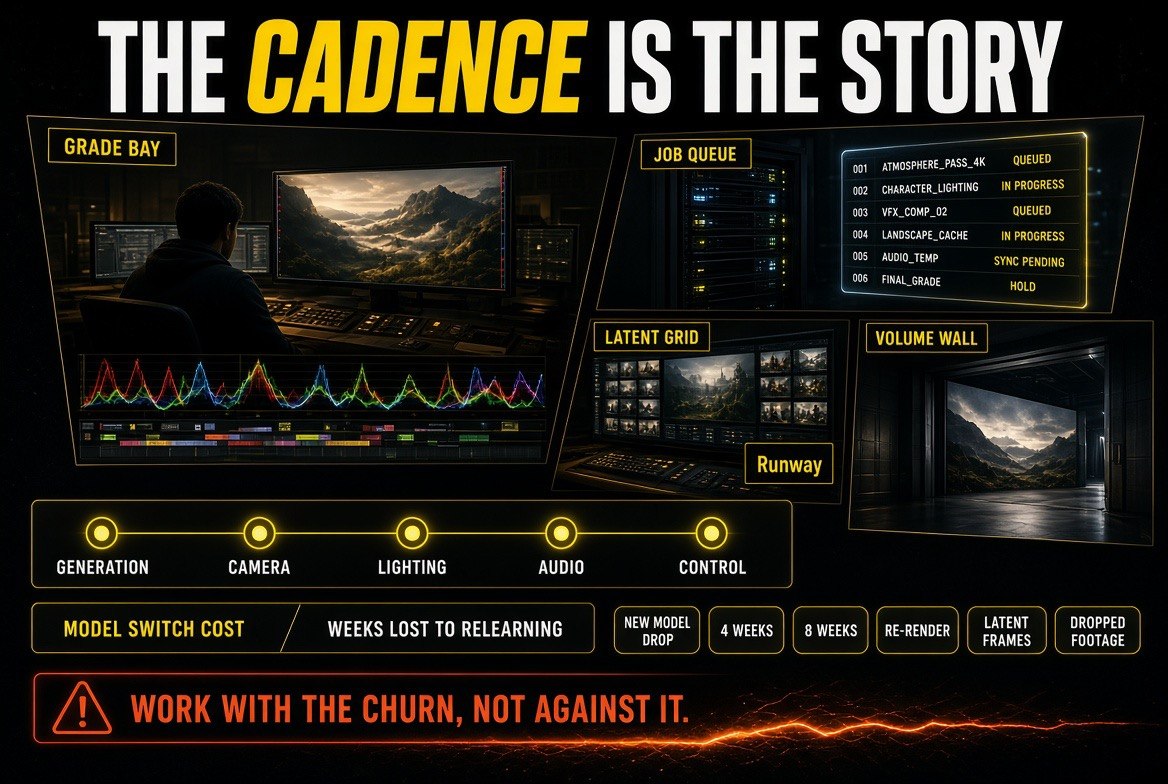
The release cadence is the real product: generation, camera, lighting, audio and control land on their own clocks.
Why the Release Cadence Is the Real Story
Count the AI video announcements you have seen in the last ninety days. Then count the ones that changed what you can actually make.
Those two numbers are very different, and the gap between them is the most important thing to understand about this category right now.
The labs building video models — Shengshu, Kuaishou, ByteDance, Runway, Google, OpenAI — are shipping on a cadence measured in weeks. The tools you actually use integrate those models on a cadence measured in months. Every new model release is a promise; the delivery happens when your editor of choice adds it.
So the correct question is never “is this model better?” It is “when does this model show up somewhere I already work?”
Where a New Model Actually Reaches You
There are three routes a new video model takes to a creator’s timeline, and they have very different timelines attached.
| Route | Typical Lag | What It Means for a Solo Creator |
|---|---|---|
| Direct from the lab’s own platform | Immediate | Usable today, but you manage a separate pipeline. |
| Wrapped by an editing tool | Weeks to months | Fits your workflow, but you wait for the update. |
| Aggregated by a multi-model tool | Weeks | Fastest to test, weakest on fine control. |
Most creators default to the third route and never notice it. That is fine for testing. It becomes a problem when your entire channel depends on a layer that can swap the model underneath you without asking.
Should You Switch Models Right Now?
Almost certainly not. Switching mid-project costs more than the marginal quality gain delivers, and the switching decision should be made between projects, not during one.
The honest comparison is not this model against that model. It is the cost of switching against the value of the improvement — and that calculation is different for every creator.
| Factor | Switch to a New Model | Stay on Your Current Stack |
|---|---|---|
| Time cost | A weekend of re-learning controls. | Zero — you already know the workflow. |
| Output consistency | Resets while you learn the new model’s tells. | Stable — your audience recognizes the look. |
| Ceiling | Higher, if the new model genuinely leads. | Frozen at whatever your stack supports. |
| Risk of wasted work | Real — previews change under you. | None — your pipeline keeps working. |
| Best moment | Between projects, with a test batch first. | When output quality is not your bottleneck. |
Read the last row twice. Most creators switch because the tool is new, not because their current output is holding the channel back. Those are different problems with different solutions.
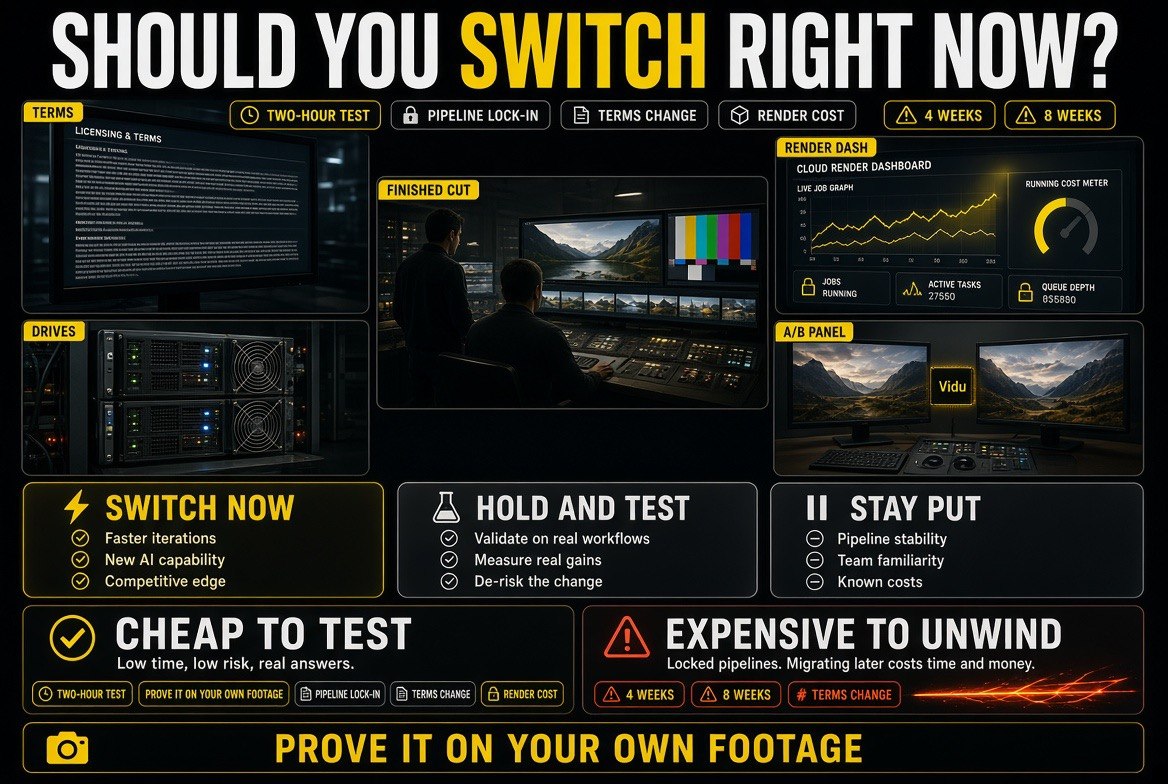
Prove it on your own footage: testing is cheap, unwinding a locked pipeline is not.
A Test Protocol That Takes Two Hours
You do not need to adopt this model to learn from it. You need a repeatable way to evaluate any new one in under two hours, and that process is the same every time a lab ships.
Write one shot list on Sunday. Same prompt, same reference image, same duration, same aspect ratio. Run it through your current model and the new one. Watch both back to back, muted, on your phone.
The model that holds up muted on a phone screen is the one your audience will actually experience. Every other measurement is a proxy for that.
Keep a folder of these tests. After six months, you will have a private benchmark that no review site can give you, and a record of exactly how much the category moved while you were working.
Where the Creator Advantage Actually Comes From
Here is the uncomfortable part. Model quality stopped being a competitive advantage for solo creators roughly a year ago.
If a model can produce a competent shot, then everyone with a subscription has access to that same competent shot. The differentiator moved elsewhere — to the idea, the pacing, the voice, and whether the audience trusts you enough to keep watching. That is not a case against new tools. It is a case against treating new tools as the strategy.
Which means the correct response to a launch like Vidu Q4 Preview is calm. Test it when it is convenient. Adopt it when it solves a real problem in your workflow. Ignore the announcement timeline entirely, because the announcement timeline is designed to make you feel behind, and feeling behind is not the same as being behind.
The creators who build real channels in 2026 will not be the ones who tried every model on the day it shipped. They will be the ones who picked a stack, learned it deeply, and spent the saved hours on the part no model can do for them.

Boring pipelines ship: one model, one pipeline, re-tested on a calendar instead of a hype cycle.
What to Watch Next
Three signals are worth tracking over the next quarter, and none of them are this model’s benchmark scores.
Which editing tools add Vidu Q4. That tells you whether it becomes practically available or stays a curiosity.
Whether the preview stays preview. Watch this space — Chinese video labs iterate quickly. A preview that goes quiet for months usually means the model did not hold up.
What the pricing does. New models tend to enter cheap and climb. Evaluators have a real window before costs normalize.
For the wider view of the category, AI Video Advisor tracks model releases and comparisons across the whole video stack. Our sister site Top Notch AI Tools covers the broader operator AI stack, and AI Table Review covers the restaurant vertical.
The Category Is Moving Faster Than Your Tools
Here is the part of this release that actually affects a working creator, and it is not about Vidu specifically.
Every few weeks a lab ships a model with better motion, better physics, better lighting, or longer clips. Each announcement is real. Each one also arrives with a demo reel cut by professionals who knew exactly which prompts would hold up under a close look.
Meanwhile your editing tool, the one you have already learned, shipped its last model integration update in a release note you skimmed. The models improved more in ninety days than your workflow did in a year.
That gap is not a failure of your stack. It is how the category is designed to work. Labs iterate quickly because iteration is cheap for them. Tools integrate slowly because integration is expensive and risky for them. You sit downstream of both, and the only lever you control is when you choose to test.
Working With Model Churn Instead of Against It
The creators who stay productive through this cycle share a handful of habits, and none of them involve chasing releases.
They keep a locked style reference. One image, one prompt, one aspect ratio that they run against every new model. It makes comparisons honest instead of impressionistic.
They separate testing from production. Testing happens in a dedicated folder on a Slack day. Production never runs on an untested model, because an untested model in a live pipeline is how a week of renders dies.
They budget for switching. Not money — hours. A realistic switch costs most of a weekend. If that cost is not in the calendar, the switch will not happen well, and a bad switch is worse than staying put.
They watch integration news, not launch news. The release that matters to a solo creator is the one that says “now available in” and names a tool you already pay for.
None of these habits require a paid subscription to anything new. They require deciding, in advance, how you will respond to the next announcement before it lands and makes the decision for you.
The Boring Conclusion
A new AI video model shipped this week, it looks capable, and it will be worth testing at some point that is convenient for you rather than urgent for the lab.
The creators building durable channels in 2026 are not the ones with the newest model in their stack. They are the ones who picked a workflow, learned it past the point where the interface stopped being interesting, and reinvested the saved hours into the part of the work that no model can do — the idea, the edit, the voice, and the trust an audience extends to a person rather than a tool.
Test Vidu Q4 Preview when you have two spare hours. Not because it will change your channel, but because a creator who tests calmly and adopts deliberately ends up with a stack that fits the work instead of a stack that reflects whatever shipped loudest that month.
Frequently Asked Questions
What is Vidu Q4 Preview?
Vidu Q4 Preview is a next-generation AI video model launched by Shengshu Technology on October 7, 2026, positioned as a creator-focused release. The “Preview” label means it is available for evaluation ahead of a general release, which is how Shengshu has historically shipped new models.
Should creators switch to Vidu Q4 Preview right now?
Generally no. Switching mid-project costs more than the marginal quality gain delivers. The right approach is to test the model between projects with a fixed shot list, compare it against your current stack muted on a phone screen, and only migrate if it solves a specific problem you already have.
How often are new AI video models released?
Major labs are shipping capability updates on a cadence measured in weeks, while the editing tools creators use to integrate those models move on a cadence measured in months. That gap between announcement and practical availability is the key thing to track.
Does a better AI video model give a creator a competitive advantage?
Rarely. If a model can produce a competent shot, every subscriber has access to the same competent shot. The advantage sits in the idea, the pacing, the voice, and audience trust — not in access to the newest model.
How should a solo creator evaluate a new AI video model?
Use a repeatable two-hour test. Write one shot list with a single prompt, reference image, duration, and aspect ratio. Run it through your current model and the new one, then watch both muted on a phone. The model that holds up in that setting is the one your audience will experience.

About Barak Schurr
Barak Schurr is a serial entrepreneur who built and exited a major ticketing platform before turning his attention to AI and content. He runs three AI-focused research sites and writes about the tools, workflows, and strategies that let solo creators build real channels — without a crew, a studio, or a Hollywood budget.
Email: [email protected]
More AI Video Resources